
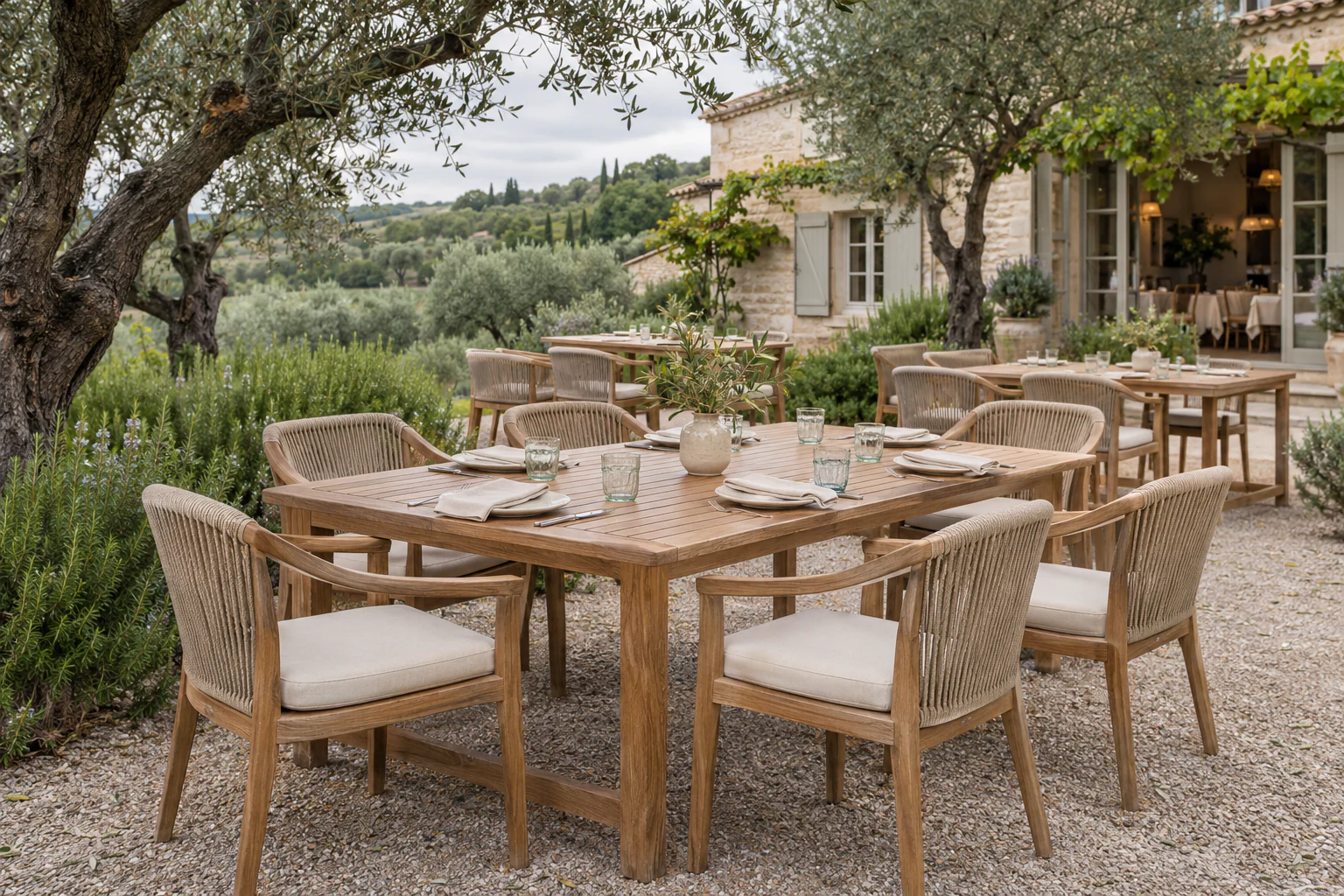
Rustic outdoor furniture works in a modern setting when the timber has character and the design stays restrained. Natural grain, a generous tabletop and a quiet woven chair can give a terrace warmth without making every piece look heavy.
The useful distinction is between a relaxed appearance and a rough surface. Guests should see texture, but they should not have to negotiate splinters, awkward edges or a tabletop that will not hold a wine glass steadily. A restaurant terrace still has to work during service.
Let texture do the work
Start with one material that carries the setting. On a stone terrace, that might be a teak dining table with visible grain and a matte surface. Keep the base uncomplicated, then choose seating that leaves some space around it visually.
Trying to make the table, chairs, planters and lights equally rustic can leave a small terrace feeling crowded. A substantial timber table often looks better beside a lighter woven chair than beside another heavily built piece.
Vectraout uses teak for its wooden outdoor furniture. For this kind of brief, discuss the actual wood sample and edge profile rather than specifying only a colour such as “natural brown.” Grain, sheen and surface preparation can change the character of the finished piece.
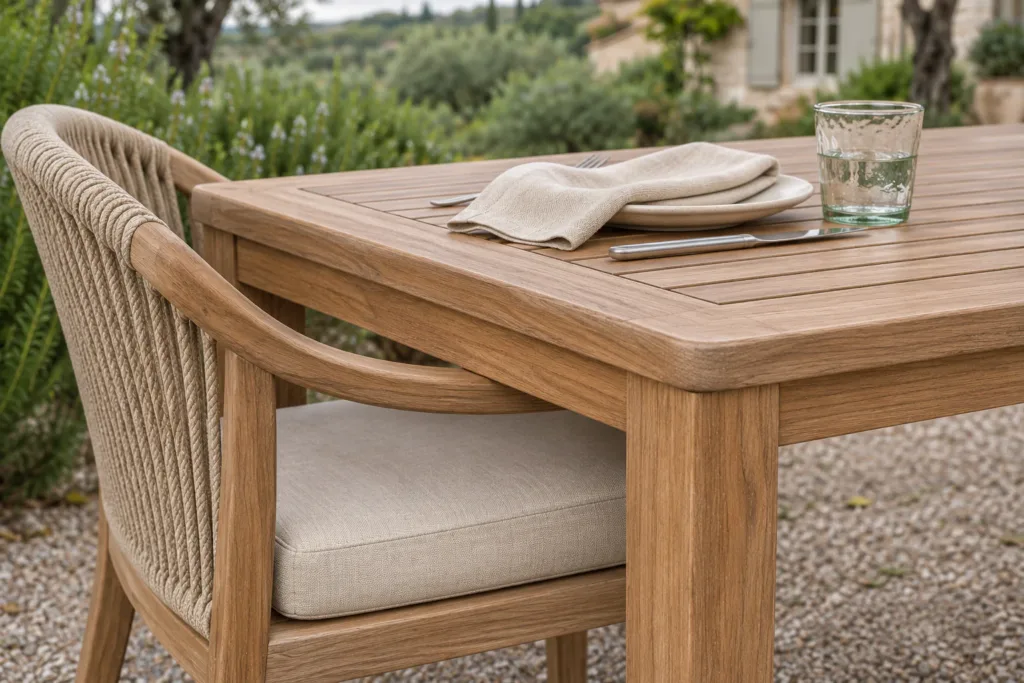
Separate character from the working details
| Detail | What creates the relaxed look | What still needs a precise specification |
|---|---|---|
| Timber surface | Visible grain and restrained variation | A smooth, cleanable finish at all contact areas |
| Table edge | A generous section with a softly finished profile | Consistent dimensions and comfortable contact for forearms |
| Chair | Teak, woven texture or a quiet neutral cushion | Seat comfort, arm clearance and compatibility with the table |
| Base | Simple timber proportions | Foot room, stability and the intended seating positions |
| Natural variation | Differences that belong to real wood | An approved appearance range rather than an undefined promise |
Do not ask for cracks or loose joints to make a new table look authentic. Likewise, a reclaimed appearance does not establish that wood is reclaimed. If that provenance matters to the project, request supporting information and agree the acceptable condition of the material.
Control the visual weight
Photographs tend to flatter large furniture in large spaces. Before approving a thick tabletop or wide chair arm, check the scale against the actual terrace. The same table can look balanced in a garden courtyard and oversized on a shallow balcony.
A useful sample test is to look from three positions: the terrace entrance, a seated guest’s viewpoint and the restaurant interior. Does the furniture leave a clear view through the space? Are chair backs hiding the garden? Does the table base fill the area where guests need to place their feet?
If the table is substantial, lighten the chairs. If the seating has deep cushions, simplify the tables and surrounding planting. Keeping one clear visual emphasis makes a rustic scheme easier to live with.
Use fewer colours, and check them outside
Warm teak, pale stone and one muted textile can be enough. For a cooler setting, combine weathered timber tones with chalk, soft grey or an understated green. These are palette directions, not rules; the building and landscape should decide which one belongs.
Take the physical samples onto the terrace. Check them in sun and shade, and under the lighting used for evening service. A cream fabric can read quite differently beside warm stone than it does against a white studio background.
Include practical questions in the colour review. Can the team identify a spill on the fabric? Will the selected finish need more attention than staff can realistically provide? A pale palette is not automatically impractical, and a dark one does not make cleaning unnecessary.

Decide how the timber should age
Natural teak gradually changes from a warmer brown towards silver-grey when exposed outdoors. Gloster’s teak material notes describe this change in untreated teak. The timing and appearance will vary with exposure and the original finish.
Agree whether the project welcomes that change or wants to maintain a warmer colour through an appropriate care programme. Make that choice before approval. A moodboard showing weathered timber and a specification demanding an unchanged golden colour are asking for different results.
Natural colour change does not remove the need to check a table for damage, loose fixings or an unsuitable surface. For cleaning advice, see how to clean teak outdoor furniture and follow the instructions supplied with the selected finish.
Do not let the style set the seating capacity
A long timber table may suggest communal dining, but the number of comfortable places depends on the chairs, leg positions and place settings. Lay out the actual crockery and pull the chairs back before fixing the count. Our table sizing article looks at these details in more depth.
Questions buyers ask
Does rustic outdoor furniture have to use reclaimed wood?
No. Rustic describes an appearance. New teak can create a relaxed setting through grain, proportion and finish. Describe reclaimed material as reclaimed only when its source is supported.
Can rustic furniture suit a contemporary hotel?
Yes. Keep the form simple and let the material supply the texture. Clean upholstery, restrained tableware and a lighter chair can stop the setting from feeling overly themed.
Should a rustic tabletop feel rough?
Visible grain does not require a rough eating surface. Specify smooth contact areas and review a sample with real tableware, napkins and bare forearms.
Give the supplier a material direction
A terrace photograph, a teak sample reference and a proposed furniture plan make a useful starting brief. Browse Vectraout’s outdoor tables, or send us the dimensions and finish direction to discuss a coordinated setting.