
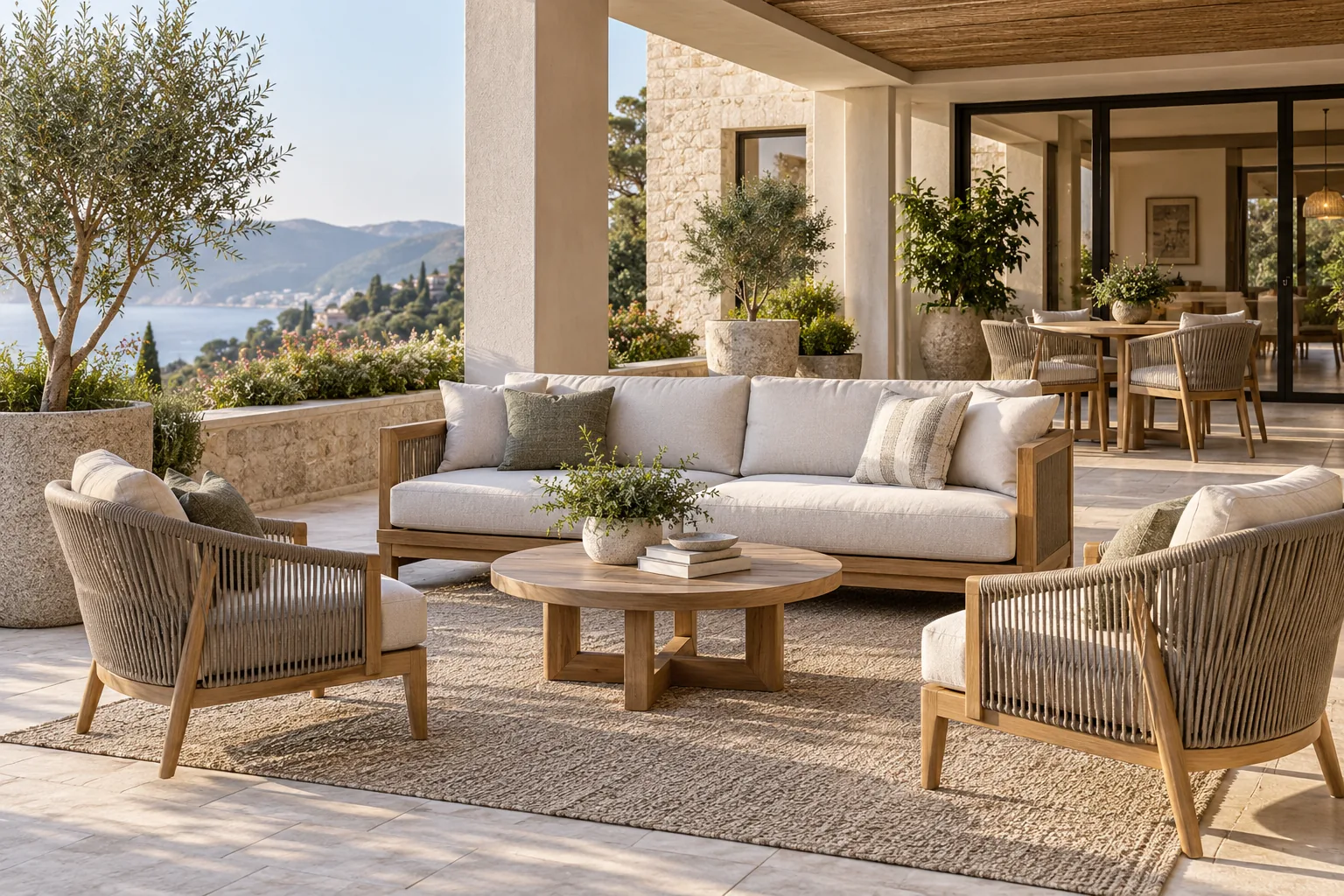
A lounge chair can look right in a presentation and still be awkward for a guest to get out of. A dining set can fit the floor plan until someone pulls a chair back. Two quotations can appear comparable while including different cushions, finishes and delivery arrangements.
Choosing hotel outdoor furniture means resolving those details before the order is approved. The aim is to give the designer, purchasing team, supplier and hotel operator the same description of what is being bought.
Write the brief around each outdoor area
A breakfast terrace and a pool deck may share the same colour palette, but their furniture has different jobs. Start with a schedule of spaces, then describe how each one will be used.
| Area | Details to resolve in the brief |
|---|---|
| Restaurant terrace | Table settings, chair movement, service routes and daily cleaning. |
| Guestroom balcony | Usable floor area, door openings and access for delivery. |
| Outdoor lounge | Seat depth, ease of getting up and reach to occasional tables. |
| Pool deck | Wet use, cushion handling, lounger adjustment and the maintenance routine. |
| Exposed rooftop or coastal terrace | Actual exposure, the proposed securing or storage arrangements and material-specific care. |
Include photographs of the site as well as a dimensioned plan. Note which areas are covered, which receive direct rain and where furniture will be stored. A supplier cannot assess those conditions from the project’s country alone.
For a seaside property, our guide to outdoor furniture for salt air covers the material questions worth adding to the brief.
Make quotations describe the same item
“Outdoor dining chair, beige” leaves too much open. The quoted item should identify the frame material and finish, the weaving material where applicable, the fabric reference and the cushion construction. Dimensions and included accessories belong on the same schedule.
Separate the frame, cushion, protective cover and other optional items in the comparison. A lower chair price is difficult to interpret if one supplier has included upholstery and another has priced the frame alone.
Keep an exceptions column. If a proposed material, dimension or finish differs from the brief, record it beside that item. This is easier to review than a substitution mentioned in a separate email.
Be specific about timber and upholstery
For timber furniture, request the wood species and the proposed surface treatment. A colour name does not identify either. For upholstery, record the fabric supplier and reference where these have been selected, together with the agreed cushion specification.
Do not rely on a screen image as the colour approval. Keep a labelled physical sample so the designer and supplier can refer to the same material.
Approve a complete setting
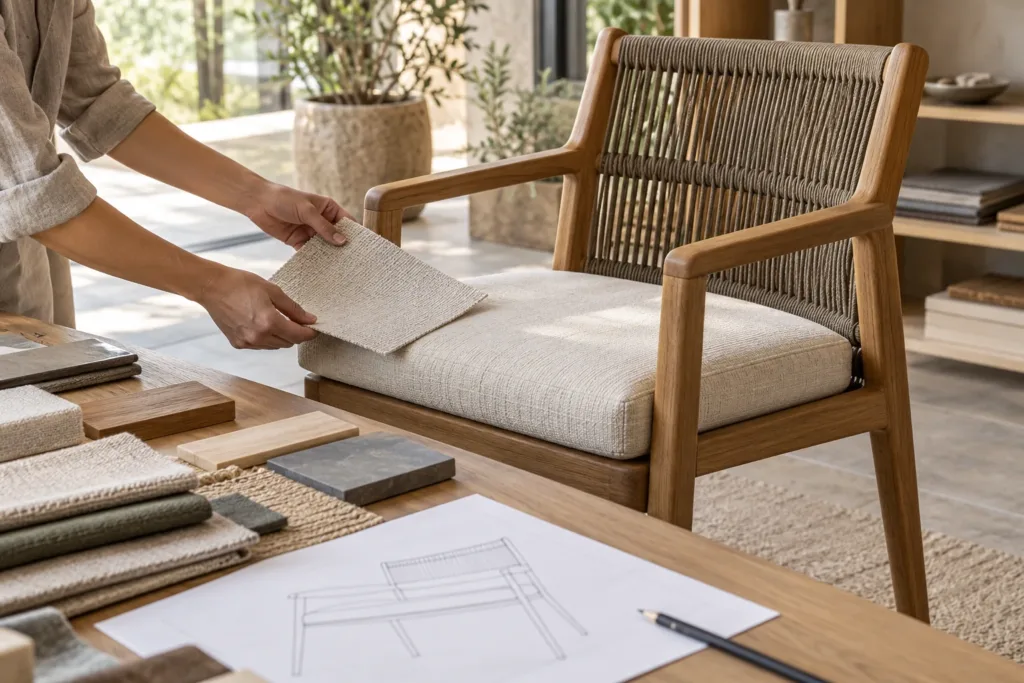
For dining furniture, put the proposed chair beside the actual table sample or an accurate mock-up. Sit down with the specified cushion in place. Check whether the armrests pass under the tabletop, whether the base restricts legroom and whether the chair can be moved comfortably.
Review lounge furniture with its accompanying tables too. A low, deep seat may suit relaxed use, but the guest still needs somewhere reachable to place a glass. The relationship between pieces is difficult to judge from separate product photographs.
Invite the operations team to the sample review
Let staff lift the chair, remove the cushion if it is designed to be removable, and try the proposed cleaning routine. If stacking is part of the plan, have the supplier demonstrate that exact chair and confirm the permitted stack height. Similar-looking chairs may not stack.
Record the approved version
Photograph the sample and record its dimensions, materials, finish references and approval date. List any remaining changes. A revised armrest, cushion thickness or table base needs to appear in the written approval before production proceeds.
You can compare the proportions of our outdoor chairs and outdoor tables while preparing the initial schedule.
Check what “commercial use” includes
Request written confirmation that the proposed product is intended for the stated hospitality use. Where the project specifies a test standard, ask for the relevant report and check the model, material configuration and scope it covers.
A report for another chair in the range may not describe the chair being ordered. Ask the supplier to explain any differences before accepting it as evidence.
Read the warranty alongside the care instructions. Confirm the conditions relating to the intended location, finish changes, upholstery and replacement parts. Keep these documents with the approved specification.
Give maintenance a place in the budget
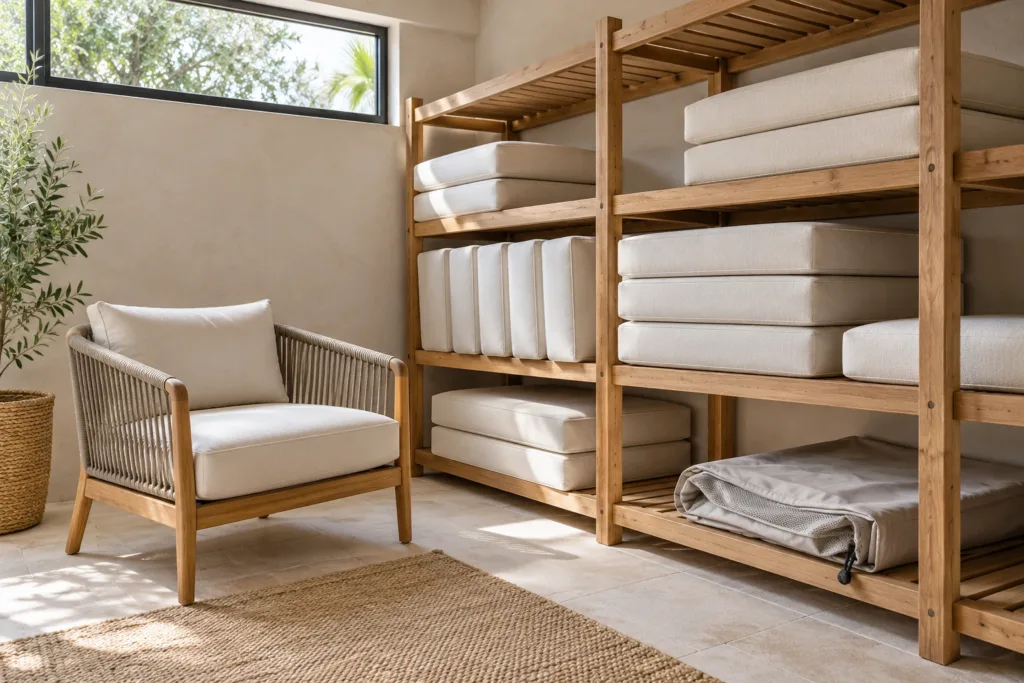
Before choosing a cushion, establish who will clean it, where it can dry and where it will be kept when the terrace is closed. Storage space needs to accommodate the actual cushion dimensions, not an estimate based on the number of seats.
Care instructions vary with the fabric and the finished cushion. For example, Sunbrella’s upholstery care guidance specifies air drying and advises checking with the furniture manufacturer before removing a casing, because cushion construction can vary. Use the instructions for the product actually ordered.
Ask whether glides, cushions, covers or other service parts can be reordered separately. Record the quoted availability and lead time rather than assuming they will remain in stock.
Define delivery beyond the arrival date
A shipment’s arrival and a terrace’s readiness for guests are different milestones. Confirm the delivery location, access restrictions and who is responsible for unloading, unpacking, assembly, placement and packaging removal.
Check carton sizes against doors, lifts and storage areas. If furniture is arriving before the site is ready, agree where it will be held and who will receive it. The programme should show time for inspection and resolving discrepancies before opening.
For phased projects, identify quantities by area and phase. Clear carton labels and a matching packing list make it easier to send the right items to the right part of the property.
Keep a usable record after opening
The approved specification is useful long after the first delivery. Keep the item schedule, sample references, drawings, care documents and supplier contacts together. They give the next purchasing manager a starting point when a terrace is extended or a cushion needs replacing.
If you are planning a hotel or resort outdoor area, share the plan, approximate quantities and intended opening date with Vectraout. Include the details that are fixed and those still open for discussion, so the first conversation can focus on the furniture your project needs.