
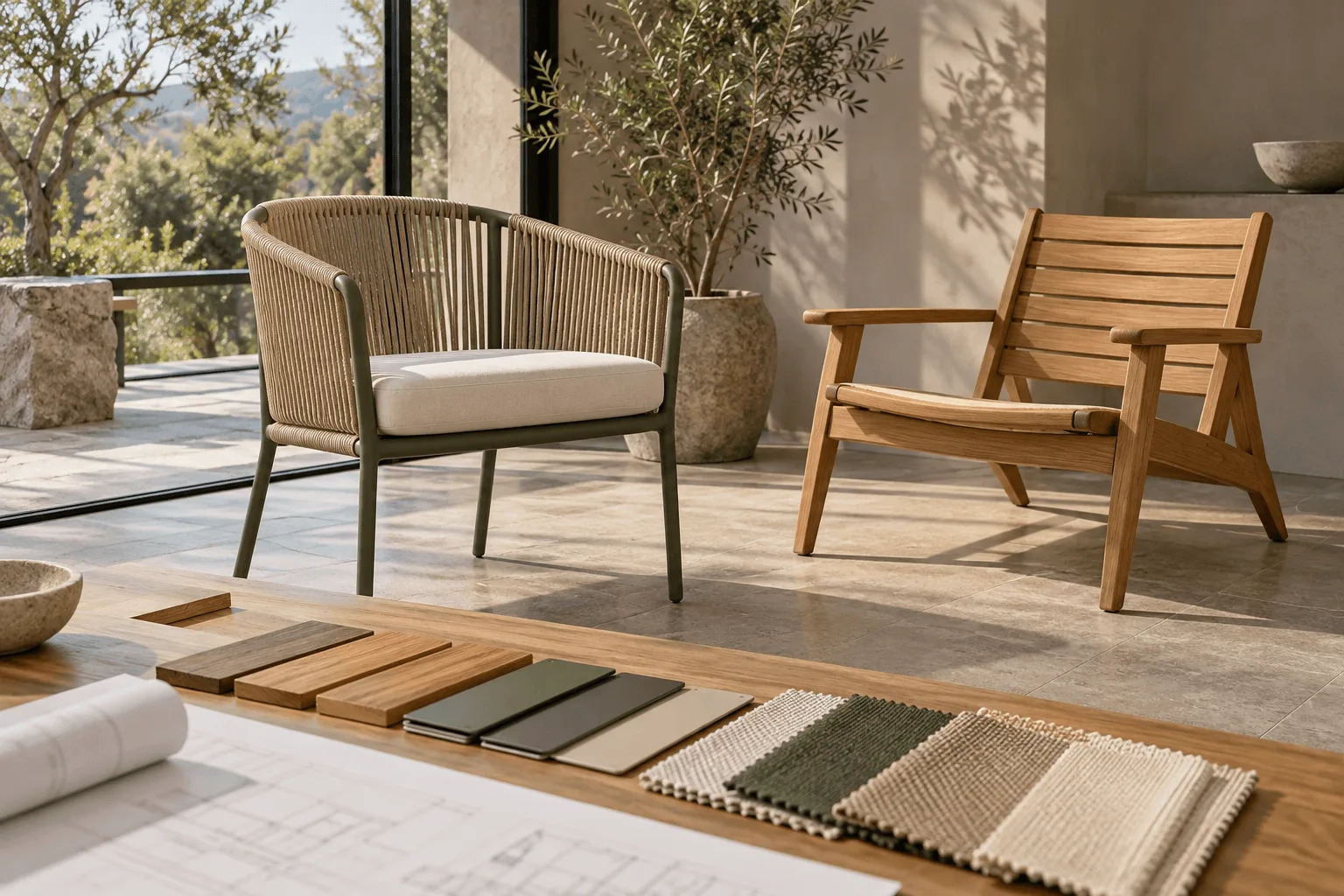
Two outdoor furniture quotations can look similar until the order reaches the sample stage. One may cover an existing collection with a choice of colours. Another may include a different frame size, revised upholstery and packaging developed for the destination. Comparing the totals before those details are settled gives a buying team very little information.
When researching outdoor furniture suppliers in China, it helps to begin with the type of business and the scope of the proposed order. A design brand, an ODM supplier and a specialist in outdoor structures may all belong in a procurement search, but they answer different parts of the brief.
The seven companies below offer several routes into that market. The list covers furniture development, established outdoor collections and a specialist option for shade and structures. It is intended for buyers preparing hotel, resort, restaurant and trade enquiries.
This guide is published by Vectraout and includes our own business. The selection uses publicly available company and product information. The numbering is an editorial order, not an audited manufacturing or sales ranking.
Outdoor Furniture Suppliers in China at a Glance
| Supplier | Published offer to review | Enquiry direction |
|---|---|---|
| Vectraout | Design development and custom outdoor furniture | A coordinated furniture brief with specific requirements |
| HIGOLD | Contemporary outdoor furniture collections | Several outdoor product categories within a design scheme |
| Artie | Resort-style lounge, dining and leisure furniture | An established collection for hospitality spaces |
| Gardenart | Outdoor design, manufacturing and ODM/OBM | A collection or product range for a trade buying programme |
| Sunneda | OEM/ODM, project customisation and stock supply | A clearly defined development or purchasing route |
| LoFurniture | Outdoor furniture with custom and OEM/ODM services | A material and product brief for outdoor settings |
| Zhengte | Outdoor leisure goods, shade and structures | Covered areas and supporting products in an outdoor plan |
Seven Suppliers to Consider for Your Buying Programme

1. Vectraout: Developing a Coordinated Outdoor Furniture Order
Vectraout is based in Zhongshan and works with brands, distributors and hospitality project teams. Its published offer combines outdoor furniture collections with design development and customisation, covering dimensions, materials, finishes and upholstery.
The practical starting point is a brief that shows how the furniture should work together. A restaurant might need a dining chair with a particular footprint, a lounge piece in a related material and tables that carry the same finish through both areas. Reference images can establish a direction, while drawings and sample discussions turn that direction into a specification.
Send the intended use, product quantities and destination alongside the references. Mark the requirements that are essential, especially dimensions fixed by the space. Development scope, order quantities, pricing and production arrangements can then be confirmed against the actual order.
View Vectraout’s outdoor furniture range.

2. HIGOLD: Reviewing Contemporary Collections as a Programme
HIGOLD presents a range spanning lounge seating, dining furniture, loungers, hanging chairs, sunshade products and accessories. Its company information describes product development and manufacturing as part of its outdoor furniture business.
For a buying team, the first step is to identify which collections fit the proposed programme. This is different from collecting individual product photographs. A coherent schedule needs agreed sizes, materials and quantities across all the furniture being ordered.
Request the current product information for the selected items, then list any changes in a separate column. A standard product with an approved finish can be reviewed on that basis. A revised dimension or construction detail needs its own confirmation before it is treated as part of the order.

3. Artie: Established Collections with a Hospitality Emphasis
Artie is based in Guangzhou, with an outdoor range presented around resort-style living. Its collections include furniture for dining, lounge, terrace and poolside settings, making it relevant to hospitality buyers seeking an established design direction.
The useful question is how much of that direction the project needs to retain. If the selected collection already fits the brief, keep the product references intact when requesting a quotation. If an adaptation is required, describe it precisely and ask how it will be handled.
For a hotel schedule, assess the repeated furniture as carefully as the feature pieces. Dining chairs, side tables and loungers often account for a substantial part of daily operation. Review the selected models in their intended arrangements and agree the finish and cushion information before the order is finalised.

4. Gardenart: An Outdoor Collection and Trade Supply Route
Gardenart describes its business as outdoor furniture design, manufacturing and distribution, with ODM and OBM forming part of its published positioning. The company identifies Guangzhou as its headquarters and Zhaoqing as its manufacturing base. Its categories include chairs, tables, sunbeds, lounges and accessories.
That makes it a relevant name for trade buyers reviewing a collection programme as well as individual products. A distributor’s brief may involve a planned assortment, consistent finishes and packaging requirements across a season.
Discuss the sales route at the beginning. An established collection, a development request and an own-brand programme need different information. Ask which route is available for the selected products, which decisions belong to the buyer and which approvals the supplier requires before proceeding.
Read Gardenart’s company profile.
5. Sunneda: Separate the Development Brief from the Stock Enquiry
Sunneda’s website identifies three business routes: OEM/ODM, project customisation and stock supply. The company lists its location in Shunde, Foshan, and presents dining sets, sofa seating, custom products and accessories among its categories.
The distinction between those routes is useful. A buyer ordering available products has a different task from one asking for a new product or a modified collection. Set out which route the enquiry concerns before asking for a price and delivery proposal.
For development work, identify the starting design, the intended changes and the reference materials. For an available-product enquiry, ask for the current specification and confirmed availability of the exact items. A website category labelled stock should lead to an availability conversation for the order, rather than an assumption that every finish is ready to ship.
Review Sunneda’s product and service routes.

7. Zhengte: Shade and Structures Within the Outdoor Package
Zhengte broadens this list beyond chairs and tables. Its outdoor leisure business includes shade and structures; its European operation, ZT Outdoor Living, identifies itself as part of the Zhengte company and presents product, logistics and distribution services for that market.
This is a supplier direction to consider when the furniture plan also needs covered areas or related outdoor products. Keep that portion of the brief separate from the seating schedule so the responsibilities remain clear.
A freestanding furniture order and an outdoor structure involve different site decisions. Dimensions, positioning, installation scope and any project-specific technical requirements should be reviewed with the appropriate supplier and site specialists. Confirm the relevant sales entity and service scope for the destination when making the enquiry.
Review Zhengte’s European operation.
How to Prepare an Outdoor Furniture Enquiry
Set Out the Product Schedule and Intended Use
A short, complete enquiry gives a supplier something concrete to assess. Include a product schedule with quantities, the delivery destination and reference images or drawings.
State whether the order is for a hospitality project, a distribution range or another purchasing programme. If several outdoor areas are involved, identify them separately so the supplier can understand the purpose of each item.
Separate Fixed Requirements from Preferences
A table may need to fit a specific room, while its finish colour is still open. A chair’s overall width may be fixed by the seating plan, while the cushion fabric is subject to sample review.
Those distinctions help a supplier identify where development work is required. They also make it easier to discuss alternatives without losing the requirements that matter to the project.
Make the Quotation Describe the Actual Order
The quotation should describe the exact product and the scope included in the price. Record the material references, dimensions, cushion specification, proposed packaging and agreed delivery responsibilities.
Where a detail is not yet confirmed, leave it as an open approval item rather than filling the gap with an assumption. The purchasing team should be able to identify what is agreed and what still requires a decision.
Use the Sample Stage to Close Decisions
Review the Furniture as It Will Be Used
Review the sample against the written brief, including the parts that are easy to overlook in a photograph.
Sit at the proposed dining table, check armrest clearance, handle removable cushions and look at the underside and joining details. Discuss any concerns with the supplier before approval.
Keep a Dated Approval Record
Keep the approved sample record connected to the order documents. Photographs, finish references and a dated specification make it easier for both sides to identify what was agreed.
If the project is likely to need replacement cushions or additional furniture later, ask how those enquiries should refer back to the original order. Consistent records are useful long after the initial delivery.
Start a Custom Outdoor Furniture Programme
For a custom outdoor furniture programme, contact Vectraout with the intended use, estimated quantities, references and destination.
The outdoor furniture catalogues offer a starting point for developing the furniture schedule.