

A café table has to do more than fit two cups. It needs to work with the menu, the chairs, the route to the door and the way staff reset the area between customers. A shape that looks generous in an empty terrace can become inconvenient during a busy service.
Choose café tables by testing the complete dining arrangement. Round tables can make informal seating and movement around corners easier; square tables often join more neatly; rectangular tables can serve planned groups. None of those advantages removes the need to check the base, chair fit and operating layout.
Start with a normal order from your menu
Set out what two customers are likely to use. Coffee and pastries need less surface than two full breakfast plates, water glasses and a shared dish. Include the items staff normally leave on the table.
Measure that arrangement before choosing the top. Then repeat the exercise with the proposed chairs. Elbows, chair arms and the table edge all affect whether the setting feels usable, even when the crockery technically fits.
Also decide how often tables need to join for a larger group. A layout built around frequent two-person service may need a different mix from one where four-person bookings are normal.
Compare the shapes by how you operate
| Shape | Useful qualities | Things to test |
|---|---|---|
| Round | Flexible chair positions and no projecting plan corners | Usable surface, base footprint and the gaps created when tables are joined |
| Square | A regular layout and a straightforward joined edge | Chair movement, corner positions and whether adjacent tops align |
| Rectangular | A defined arrangement for several people | Reach, base positions and the space occupied when only part of the table is used |
Equal width does not mean equal tabletop area. A 700 mm square top has an area of 0.49 square metres, while a round top with a 700 mm diameter has an area of about 0.38 square metres. These are calculated examples, not seating-capacity standards.
The additional corner area of a square top may help with plates and shared items. A round edge may be easier to move around in a particular layout. Test both with the actual service setting instead of assuming one shape is always more efficient.
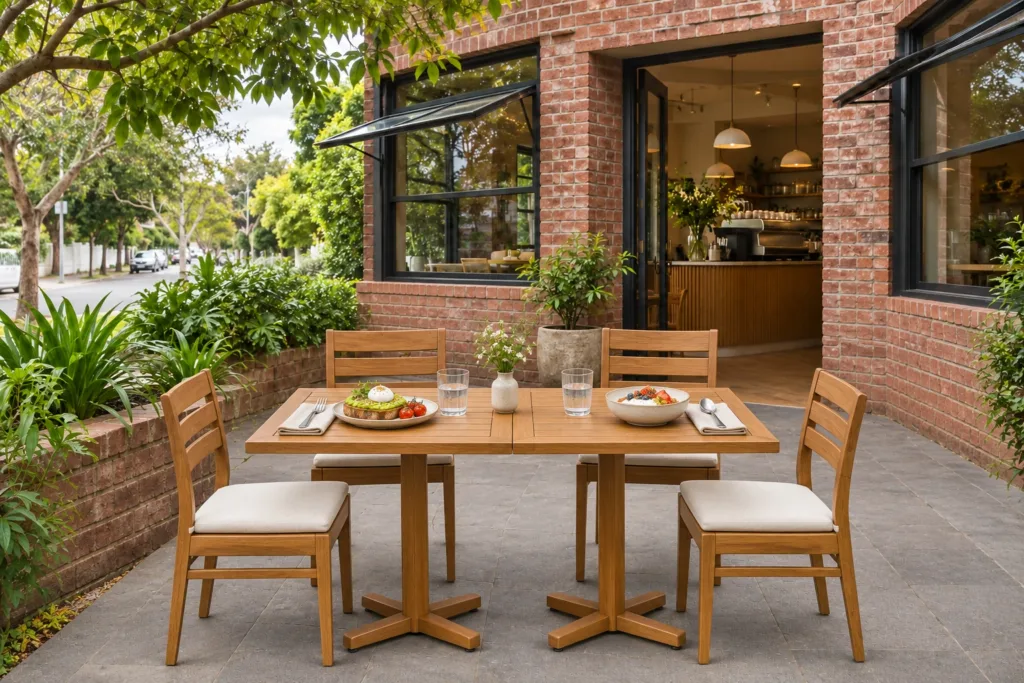
If tables need to join, approve them as a pair
Matching nominal dimensions do not guarantee a level joined surface. Top thickness, edge profiles, feet and adjustment arrangements all affect the result. Check the proposed tables together on a surface similar to the terrace.
Look underneath the joint. Legs or floor plates may compete for the same space, leaving a guest with an awkward sitting position. Check whether the maker provides an approved joining arrangement and how it is operated.
Think about moving the tables as well. The top should not be used as a lifting handle unless the design permits it. Staff need a practical method for separating, carrying and resetting the furniture during service.
The base determines where guests put their feet
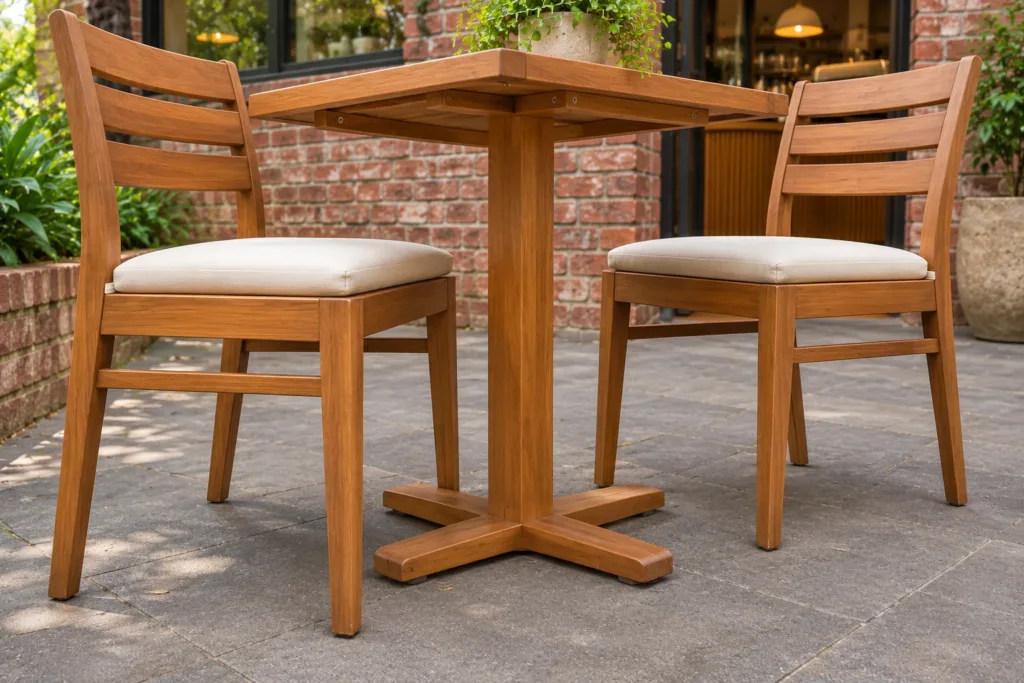
A central pedestal can offer flexible seating, particularly around a small top. Its floor plate can still occupy the space people need for their feet. Four legs can be easy to understand, but narrow gaps between them may prevent wider chairs from fitting.
Review the underside height and any apron or support rail. Check the chosen chair with its cushion fitted. Arms that almost fit in a photograph can catch when someone pushes the chair closer to the table.
A base and top should be supplied or expressly approved as a compatible assembly. Do not enlarge a top on an existing base simply because the fixing holes can be made to align.
Choose a surface the team can maintain
Outdoor café tables collect more than food spills. Sunscreen, dust, wet leaves and water left beneath objects all affect the cleaning routine. Ask for instructions for the specific top and finish, and let the operating team assess a sample.
Teak introduces a natural material variation and can suit a restrained terrace setting. Agree the supplied finish and whether the long-term intention is natural weathering or maintaining a warmer appearance. Keep any treatment compatible with the product and nearby upholstery.
For slatted tops, try the cups, glasses and trays used by the café. Check that their bases sit securely on the surface. A tabletop should be assessed as working furniture, not only as a background for a photograph.
Run a short service trial
Mark out a representative group of tables and use the actual chair footprint. Walk the service route carrying a tray, pull a chair back, clear a table and reset it. Check the entrance, neighbouring groups, planters and any shade supports at the same time.
If the setting uses public land, confirm the applicable approval and layout requirements with the local authority. City of Sydney’s outdoor dining application information is one example of a local process; requirements elsewhere must be checked separately.
Our restaurant patio layout article discusses the overall space, while the bistro chair article covers another part of the furniture selection. Use this table review to settle the working surface and base.
Order the mix that serves your actual customers
After the trial, record the approved top size, shape, finish, base and chair relationship. Specify where tables will be joined and which pieces need to remain movable. Keep those details with a simple plan rather than ordering a count of tables without a layout.
Send Vectraout the terrace plan and typical place setting if you are developing a custom outdoor table brief. Include the chair reference and any regular group-size requirements.
Frequently asked questions
Are round or square café tables better?
It depends on the service and layout. Round tables offer flexible chair positions; square tables often join more neatly. Test both with the menu, chairs and routes used at the venue.
How big should a two-person café table be?
Base the decision on the normal place settings and chair arrangement. Two coffees need less surface than two meals. A nominal seating count does not replace a sample test.
Can two tables with the same stated size be joined neatly?
Not always. Check top height, edge profile, base positions and the manufacturer’s joining arrangement using the actual samples.
Should I buy extra-large tables so every group can fit?
A flexible mix may serve the venue better than making every table large. Compare normal group sizes, joining needs and the space occupied during everyday service.