
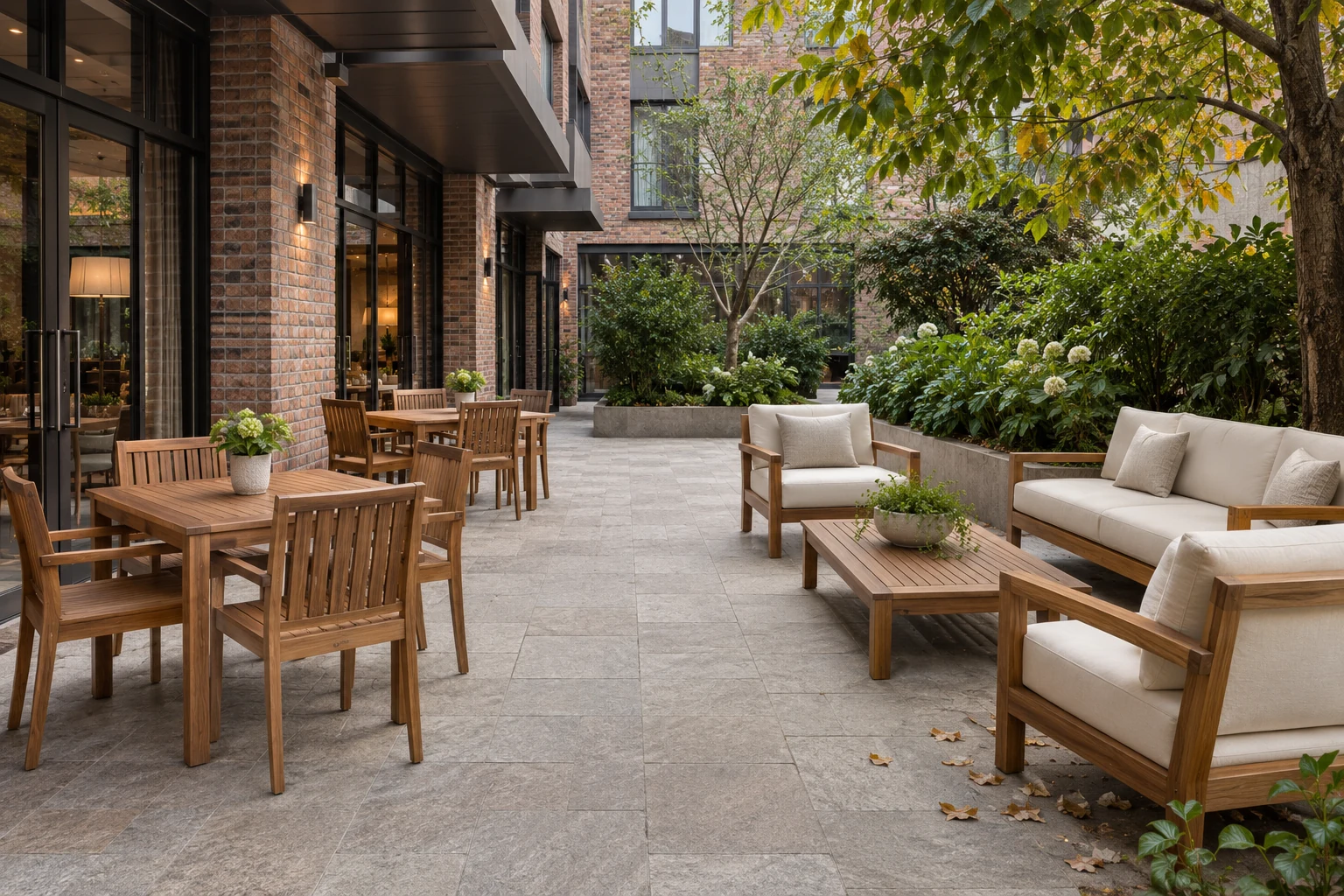
Three suppliers can receive the same terrace photograph and return three very different quotations. One includes cushions, another assumes a different table size, and a third has priced a frame finish that was never intended for the project.
A hospitality furniture schedule gives every supplier the same description of what is required. For an outdoor area, it should identify each item, its location and quantity, the dimensions and finishes to be confirmed, and the approvals needed before production.
Divide the project into operating zones
List the outdoor areas before listing furniture: dining terrace, pool deck, sheltered lounge, entrance seating or another clearly defined zone. Describe how each area will be used, who will maintain it and what exposure it receives.
A chair used for a short café visit serves a different purpose from a lounge intended for a long afternoon. Poolside seating may need a different cushion and cleaning discussion from furniture protected by a roof. These distinctions belong in the brief rather than being left for suppliers to infer.
Keep the schedule linked to a plan. A location code makes it easier to see where each item belongs and whether the quantities agree with the layout. Include the routes used by guests, service staff and the team moving the furniture.
Use one reference for each genuinely different item
Give every item type a clear project reference. Two chairs with the same appearance but different fabrics may need separate schedule lines. Conversely, identical chairs used in several locations can retain one product reference with quantities recorded by zone.
Keep the project’s references separate from a supplier’s product codes. That makes alternative quotations easier to compare without rewriting the schedule around whichever catalogue arrives first.
| Schedule field | What to record | Why it helps |
|---|---|---|
| Project item reference | Your own chair, table or lounge identifier | Keeps competing offers aligned |
| Zone and quantity | Location, number and unit such as pieces or sets | Prevents uncertain scope and double-counting |
| Size or configuration | Dimensions, handedness, top shape and usable clearances | Makes the furniture match the plan |
| Materials and finish | Timber, frame finish, fabric range and colour references | Replaces broad descriptions with an approvable specification |
| Included components | Cushions, covers, connectors, mounting or other agreed parts | Exposes omissions before comparing totals |
| Approval and delivery | Sample stage, drawing approval and delivery requirements | Makes responsibilities and timing visible |
Add the plan revision and date at the top of the schedule. When a terrace layout changes, update the affected quantities and send the same revised version to every supplier still quoting.
Describe finishes that can be approved
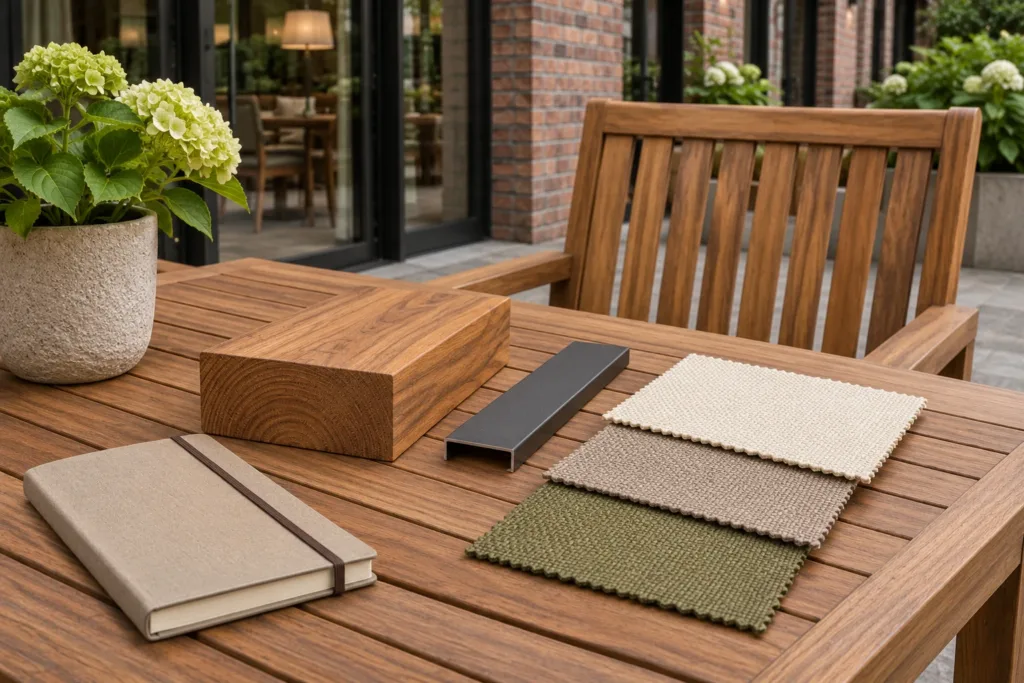
Natural timber varies. If teak is specified, agree the supplied appearance and the intended maintenance approach. For metalwork, record the proposed finish code, texture and system information appropriate to the site. For cushions, retain the fabric range and colour reference as well as a sample.
Write down which details remain open. An explicit request for two fabric alternatives is easier to price than a line saying beige outdoor fabric. Ask suppliers to identify proposed substitutions rather than quietly treating them as equivalent.
Include the care information with the material review. A reference such as Gloster’s published product-care information shows the kind of material-specific guidance an operating team may need. Request the documents that belong to the products actually offered for your project.
Compare the same scope before comparing the total
Ask suppliers to return a line-by-line response, identifying inclusions, exclusions, alternatives and unresolved items. Separate the furniture price from packing, freight, installation and other agreed services so the scope is visible.
Check the units. A set may mean a sofa and two chairs in one quotation and a different combination in another. Record the components of each set or request a piece-by-piece breakdown. Include the proposed spares and replacements as identifiable lines.
Then compare the confirmed options. A low total based on fewer components or another finish does not answer the same brief. Resolve the differences and keep a written record of the version each supplier has priced.
Build approvals into the programme
Agree who approves drawings, materials, upholstery and the sample. State the sequence and allow time for revisions. If several people are involved, identify the person authorised to issue the final approval.
Record what the production lead time begins from. An initial quotation, a payment and an approved final specification are different milestones. Confirm production, transport, receiving and installation as separate parts of the programme, rather than assuming a factory lead time means arrival on site.
Custom work also needs a clear quantity discussion. Ask how the proposed materials, finishes and construction affect the order requirement, rather than relying on a generic minimum that may not apply to the particular brief.
Use a sample to close the open questions
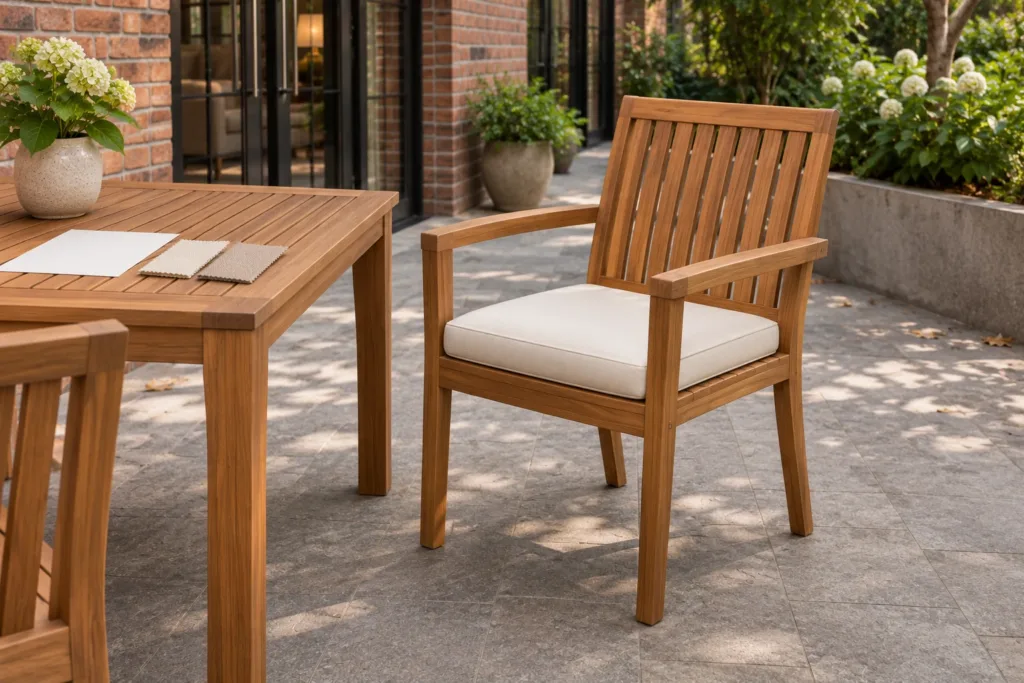
Review the furniture in its intended role. Sit at the table with the proposed chair and cushion, operate any mechanism and check the finish in daylight. Let the operating team assess cleaning, handling and storage.
Keep an approved sample or a documented reference set where practical. Record the drawing revision, finish references and any agreed deviations. Photographs help, but they should accompany the technical and material information rather than replace it.
For the product-quality review itself, our hotel outdoor furniture buying article provides a separate set of checks. Use the schedule to record the decisions that follow from that review.
Plan the handover before the order is complete
Request the product references, care instructions, assembly or installation information and replacement-parts contact needed by the team receiving the furniture. Agree how packaging and location labels will relate to the schedule.
At receiving, count against the current approved version and record any discrepancy or damage promptly. Keep the schedule as a working document for replacement cushions, additional chairs and future phases of the property.
Send Vectraout the plan and initial schedule when the outdoor scope is taking shape. A brief can begin with approximate requirements, provided the open points are clearly identified for discussion.
Frequently asked questions
Is a mood board enough to request a hospitality furniture quotation?
It is useful for design direction, but dimensions, quantities, locations and included components still need to be defined. A short schedule helps suppliers price the same scope.
Should every supplier use its own product codes?
Keep your project references consistent and ask each supplier to map its codes to them. This makes alternatives and revisions easier to compare.
Can the same furniture specification be used across every outdoor zone?
Sometimes, but check exposure, operating needs, comfort and maintenance for each zone. A consistent appearance does not require ignoring different site conditions.
What should stay in the final handover file?
Retain the approved schedule, drawings, finish and fabric references, care information, installation documents where relevant, warranty terms and replacement-parts contacts.