
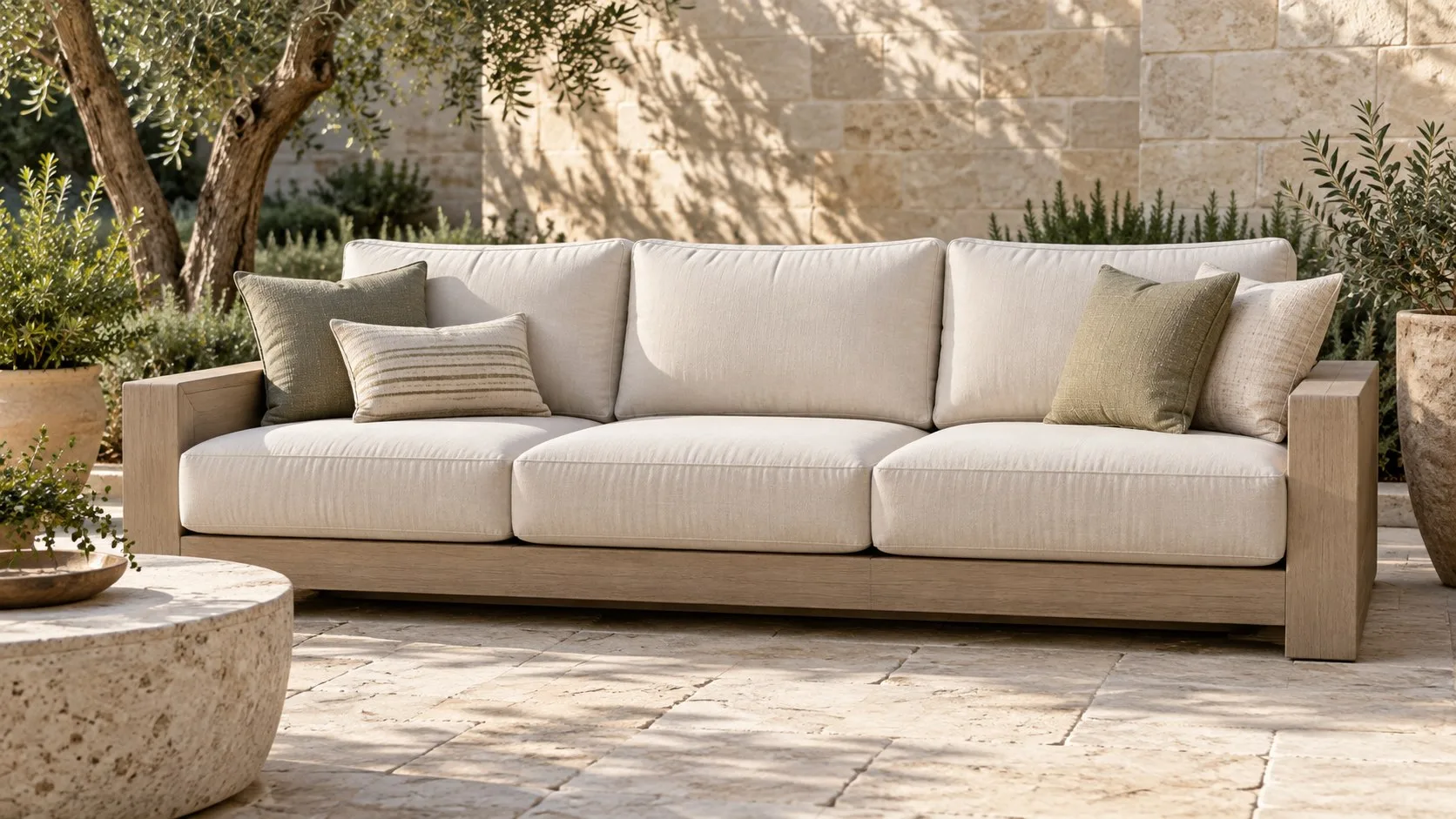
How do you clean outdoor cushions without removable covers?
To clean outdoor cushions without removable covers, treat the cover and filling as one assembly. First remove loose dirt with a vacuum or soft brush. Check the furniture, fabric and filling care instructions, then test the approved cleaner on a hidden area. Work gently across the entire panel rather than scrubbing only the stain, and remove cleaner residue using the specified method. Do not soak an unknown filling or use a pressure washer. Move the cushion only as its construction allows and provide airflow around every surface. Let the full cushion—not just the fabric—dry before use, covering or storage. The safe amount of water depends on the foam, liner, seams, underside and supporting base. If the filling is unknown, the upholstery is damaged, odors return after cleaning, or the instructions call for professional care, stop and use a qualified upholstery cleaner.
First, identify what you are cleaning
Find the furniture model, fabric label and any care sheet supplied with the order. Look for instructions for both the upholstery and its filling. A fabric may tolerate rinsing while the material underneath requires a different approach.
Perennials’ care guide makes this distinction explicit: its advice differs for cushions made with exterior-use foam and those made with interior-grade foam. That is why a fabric brand alone is not permission to soak an entire cushion.
Also check the surrounding materials. Water and cleaner can run onto a wood arm, a coated frame or a stone floor. Remove nearby loose cushions and accessories, and choose a place where the approved cleaning process will not damage adjacent surfaces.
If the filling is unknown, the upholstery is damaged, or the instructions specify professional cleaning, resolve that before applying water. A small cleaning job becomes more difficult if moisture is trapped inside.
What you need for a gentle clean
Gather a vacuum with an upholstery attachment or a soft brush, clean cloths, a sponge, clean water and a cleaner approved for the identified fabric. A second clean cloth or bucket helps keep removed dirt out of the cleaning solution.
Skip stiff scrubbing brushes, improvised chemical mixtures and a pressure washer. The aim is to lift contamination without driving it farther into the filling or damaging the fabric surface.
Keep a clean, ventilated drying area available before starting. If the only available space is damp and enclosed, postpone a wet clean or arrange a different approved method.
A step-by-step cleaning method
1. Remove loose contamination while it is dry
Vacuum or gently brush away dust, leaves, crumbs and loose soil. Work around seams and piping without pulling at threads. Do this before adding cleaner so loose debris does not become a larger wet mark.
For a fresh liquid spill, blot with a clean absorbent cloth instead of rubbing it over a wider area. Keep changing to a clean section of cloth.
2. Test the approved cleaner
Use the dilution and method specified for the fabric or product. Test an inconspicuous area and let it dry before treating the visible panel. Check for color change, residue or altered texture; a wet surface can hide those effects.
Do not assume that a cleaner approved for one outdoor fabric is compatible with a printed fabric, trim or different-colored insert on the same cushion.
3. Clean the panel evenly
Work with a soft sponge or brush using gentle pressure. Follow the approved method across the panel rather than repeatedly attacking a small spot. Sunbrella’s upholstery guidance recommends seam-to-seam cleaning for upholstered pieces to help avoid water rings and residue.
For an attached seat, pay attention to the back edge and seams where excess water could collect. Do not saturate an unknown filling to make the surface look cleaner.
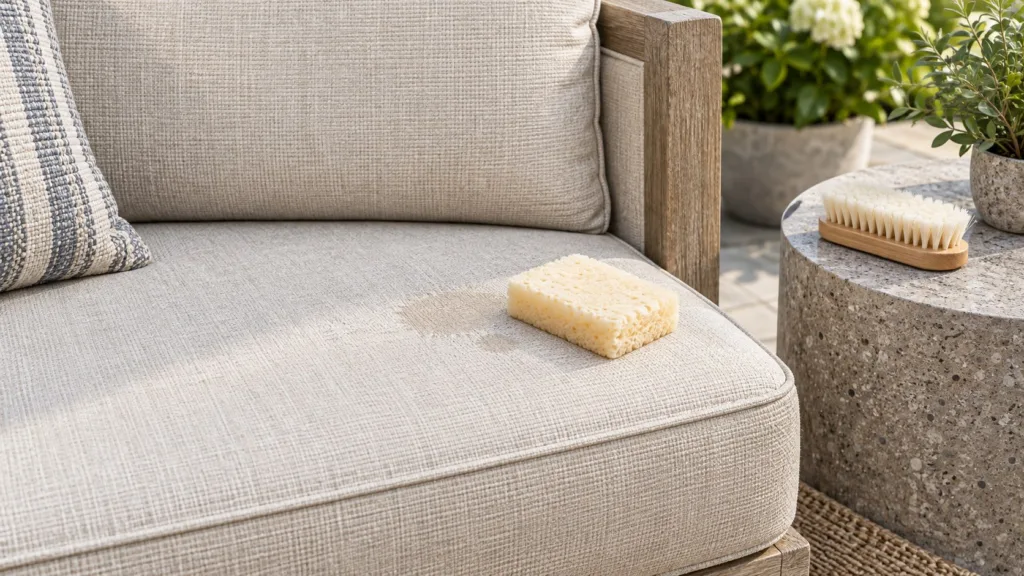
4. Remove cleaner residue
Rinse or remove residue using the product’s approved procedure. Rinsing is part of many outdoor-fabric cleaning methods, but permission to rinse the fabric is not automatically permission to hose down the complete sofa.
If the assembly cannot tolerate the amount of water needed to remove a cleaner, stop and seek an appropriate upholstery-cleaning method. Do not leave a concentrated cleaning solution in place simply because the mark looks lighter.
5. Dry the whole cushion
Use airflow and the drainage arrangement specified for the product. Move loose cushions only in ways their construction allows, and keep air moving around the surfaces. Attached upholstery may need more attention to shaded corners and the supporting base.
Sunbrella specifies air drying for its upholstery fabrics. Avoid adding heat or steam unless the complete cushion’s instructions allow it. A dry-feeling cover does not establish that the filling is ready to be enclosed under a furniture cover.
What about stubborn stains?
Identify the contamination before escalating treatment. The next step for an oily mark may differ from the next step for a drink spill or persistent damp odor.
| What you notice | Useful first response | What to avoid |
|---|---|---|
| Fresh liquid spill | Blot promptly, then follow the fabric’s spot-cleaning method | Rubbing the spill across a larger area |
| Loose mud or dust | Remove loose debris gently before wet cleaning | Grinding particles into the weave |
| Grease or sunscreen | Use the fabric maker’s instructions for oily stains | Adding an unapproved strong degreaser |
| Repeated rings after cleaning | Review even panel cleaning and residue removal | Repeatedly treating only the ring’s center |
| Recurring odor or deep contamination | Check filling condition and seek specialist advice | Covering the cushion before the cause is resolved |
Some performance-fabric instructions permit specific stain treatments. Those directions belong to that material and dilution; do not turn them into a universal recipe for all outdoor cushions. Repeated heavy treatment is also a reason to review whether the filling or casing needs replacement.
Make the next clean easier
Remove loose debris regularly and deal with spills promptly. Keep cushions away from plant pots or other items that trap moisture against their surface. Before covering or storing furniture, check that the upholstery and supporting surfaces are dry.
For a hotel or restaurant, make a short care card for each cushion type. Record the furniture model, fabric, approved cleaning product, method and supplier contact. Add a photograph so staff can identify the correct item without relying on a color description alone.
When replacing cushions, compare cleaning access as well as appearance. Ask how the filling drains, whether a casing is intended to be removed, and how a replacement is ordered. A zipper does not, on its own, make a cover machine washable.
Frequently asked questions
Can I put a whole outdoor cushion in a washing machine?
Only if the cushion manufacturer explicitly allows it. Instructions for machine-washable fabric casings do not establish that the filling, seams and complete assembly can be machine washed. A fixed or tailored cushion may require cleaning in place.
Can I use a carpet cleaner or extractor?
Check the cushion instructions and the machine’s suitability for that upholstery. Equipment that adds water also creates a drying requirement. If the filling and frame cannot be assessed, a qualified upholstery cleaner is a better starting point than an improvised extraction cycle.
How long do outdoor cushions take to dry?
There is no dependable universal time. Thickness, filling, the cover assembly, humidity and airflow affect the result. Plan for drying as part of cleaning and avoid storing a cushion because its surface alone feels dry.
Do non-removable cushions mean poor quality?
No. Some tailored constructions are intended to be cleaned with the cover fitted. Judge the complete care and replacement system rather than whether a zipper is visible. The important question is whether the required routine suits your use.
Choose upholstery around how you will use it
A useful furniture brief includes more than a fabric color. Tell the supplier whether the seating is exposed to rain, how often it is used, what cleaning resources are available and where cushions will dry.
探索 Vectraout outdoor furniture, review the cushion specification used in the Sol custom aluminium cushioned sun lounger, and compare the outdoor cushion cover guide with the custom cushion specification guide. You can also discuss your project requirements. Confirm the care information for the actual specification before ordering.