
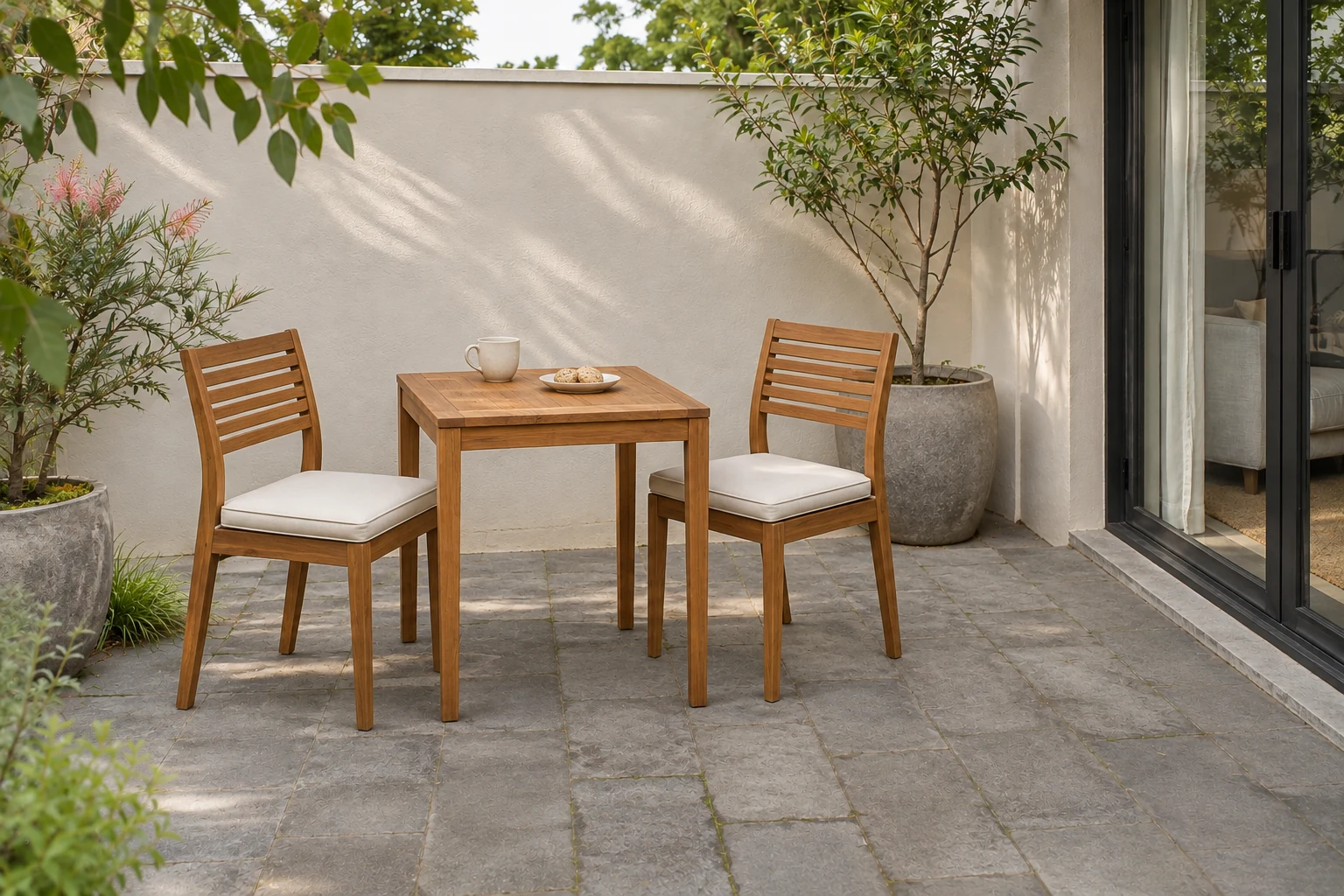
The table may be small. The space needed to use it is not always small. Chairs pull out, doors open, somebody carries a tray through the group, and a planter quietly occupies the corner that looked empty on the drawing.
Choose a small patio table by measuring the occupied dining arrangement, not only the tabletop. The best shape is the one that leaves enough usable space for the way you eat, sit and move around the patio.
Give the patio one main job
Decide what the table needs to do most days. Coffee for two, a laptop for an hour and a shared dinner place different demands on the same surface. A very compact table can handle cups easily but become crowded once two full place settings arrive.
Write down the normal number of users and the objects that need to fit. Set out those objects on an existing table. Measure the useful surface they occupy, including space for elbows and the shared items between them.
If you entertain occasionally, avoid designing every day around the largest gathering you might host. A movable extra table or an occasional rearrangement can be a better answer than leaving the patio permanently crowded.
Measure the occupied footprint
A dining chair extends beyond the tabletop even when someone is sitting close to it. It needs still more space while the person sits down or stands up. A chair tucked underneath a table in a product photograph does not show either of those conditions.
Draw the table first. Add the actual chairs in their occupied positions, then mark the movement behind them. Keep this separate from the route to a door or another part of the property.
Here is an illustrative calculation. A 700 mm round table with an assumed 450 mm occupied chair projection on each of two opposite sides creates a 1,600 mm dining footprint before any passing route is added. The 450 mm figure is an example, not a recommendation for every chair. Measure the chosen seat and test it with a person.
Mark the arrangement on the floor. Open the door, carry a tray through and pull a chair back. Where public access or service routes are involved, use the site’s approved layout rather than treating a residential planning example as a compliance dimension.
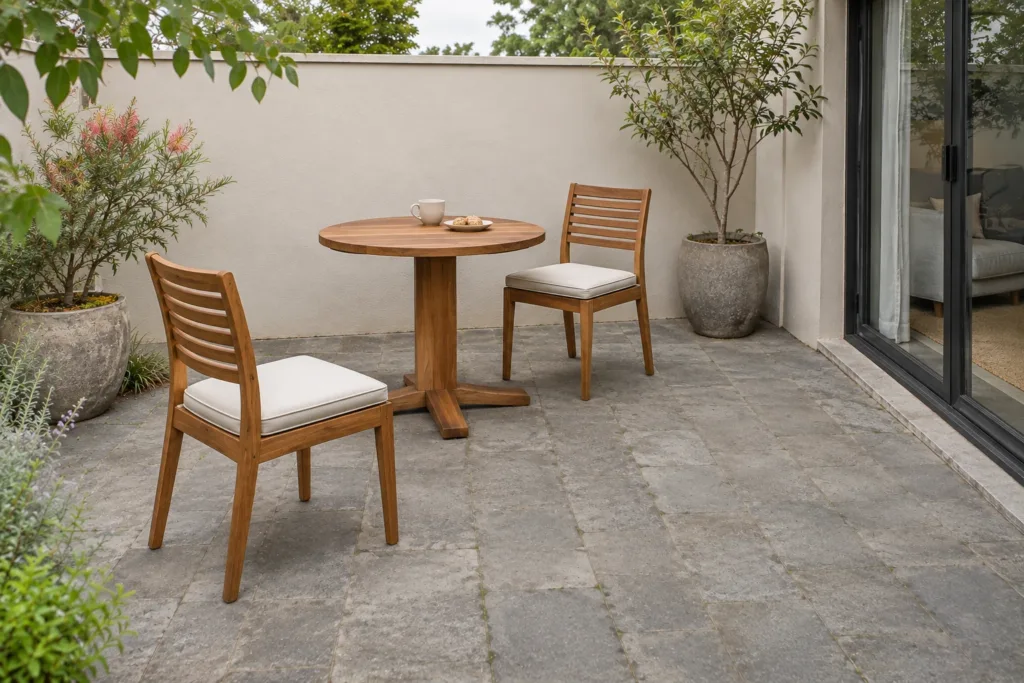
Round, square or a narrow rectangle?
| Shape | Where it can work | What to check |
|---|---|---|
| Small round table | A compact setting approached from several directions | The pedestal or legs must leave room for both users’ feet |
| Square table | A quiet corner or a layout that may join with another table | Corners, chair positions and the space needed to pull seats out |
| Narrow rectangular table | A long terrace where dining runs beside the building | Place-setting depth and whether the table blocks a door or route |
| Folding table | A space used for different activities during the day | Locking mechanism, folded dimensions and a real storage position |
Round tables remove sharp plan corners, but that does not automatically make them more space-efficient. A square table can sit neatly against a wall when only two sides are used. Conversely, moving a table against a wall may make one chair awkward to reach. Test the seating positions you will actually use.
For larger settings, our outdoor dining table size article discusses the relationship between tables and chairs. Keep a compact patio decision focused on the complete arrangement rather than the number of seats advertised.
The base can matter as much as the top
A central pedestal may let chairs move around a small table more freely. Its floor plate can still compete with feet, particularly if it is large or raised. Four legs can offer a familiar seating position, but the distance between them may prevent a broad armchair from fitting.
Check the underside height, not only the tabletop height. A deep apron can catch chair arms or reduce knee space. Ask for the clear dimensions beneath the top and compare them with the chairs, including their cushions.
Try the sample on a surface similar to the patio. A table that sits steadily on a showroom floor may need suitable adjustment on paving. Do not improvise a permanent solution with loose packing beneath a foot.
Keep the material palette simple
In a small space, several unrelated frames and finishes can make the furniture look busier than it is. A teak table with chairs of a compatible scale is a straightforward starting point. A restrained metal frame can also work with teak when colour and proportions are considered together.
Ask how the top, legs and fittings should be cleaned. On a tight balcony, the ease of reaching every surface matters. A heavy table that cannot be moved by the people using the space can make ordinary cleaning surprisingly difficult.
Folding furniture deserves a separate test. Confirm that the mechanism is suitable for the intended outdoor use and that the furniture can be carried through the opening when folded. IKEA Australia’s small outdoor-space ideas offer examples of flexible arrangements when one patio needs to serve several activities.
Use a short layout trial before ordering
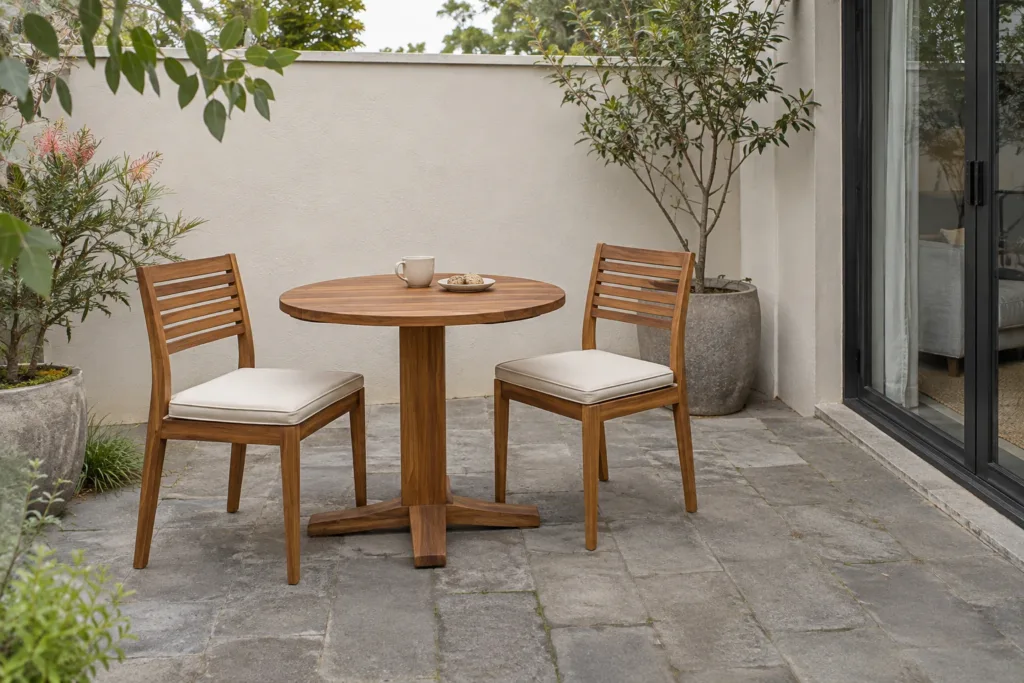
Keep the taped outline on the patio for an evening. Move around it with the people who normally use the space. Check access to plants, storage, drains and any screen or blind that needs to operate.
A smaller top will not solve a layout built around chairs that are too deep. If the arrangement still feels cramped, compare another chair shape or reduce the number of permanent seats. Retain the furniture that serves the patio’s normal use.
When discussing a custom table, send the usable patio dimensions, a marked door position and the chair you intend to use. Vectraout can review that brief alongside the proposed size, material and finish.
Frequently asked questions
What size table fits a small patio?
There is no single size that fits every small patio. Measure the table together with occupied chairs, chair movement and the route around the setting. Start with the number of people and the objects used at a normal meal.
Does a round table always save space?
No. It can make movement around corners easier, while a square or narrow rectangular table may fit a particular wall or long balcony better. Compare the occupied footprints.
Should I choose folding chairs as well?
They can help when the space changes use, but only if there is somewhere practical to store them. Check the folded dimensions, stability, mechanism and intended exposure.
Can I put a larger top on an existing base?
Only with confirmation that the base, fixing arrangement and top are compatible. A larger surface changes the forces on the support, so matching the bolt holes is not enough.