
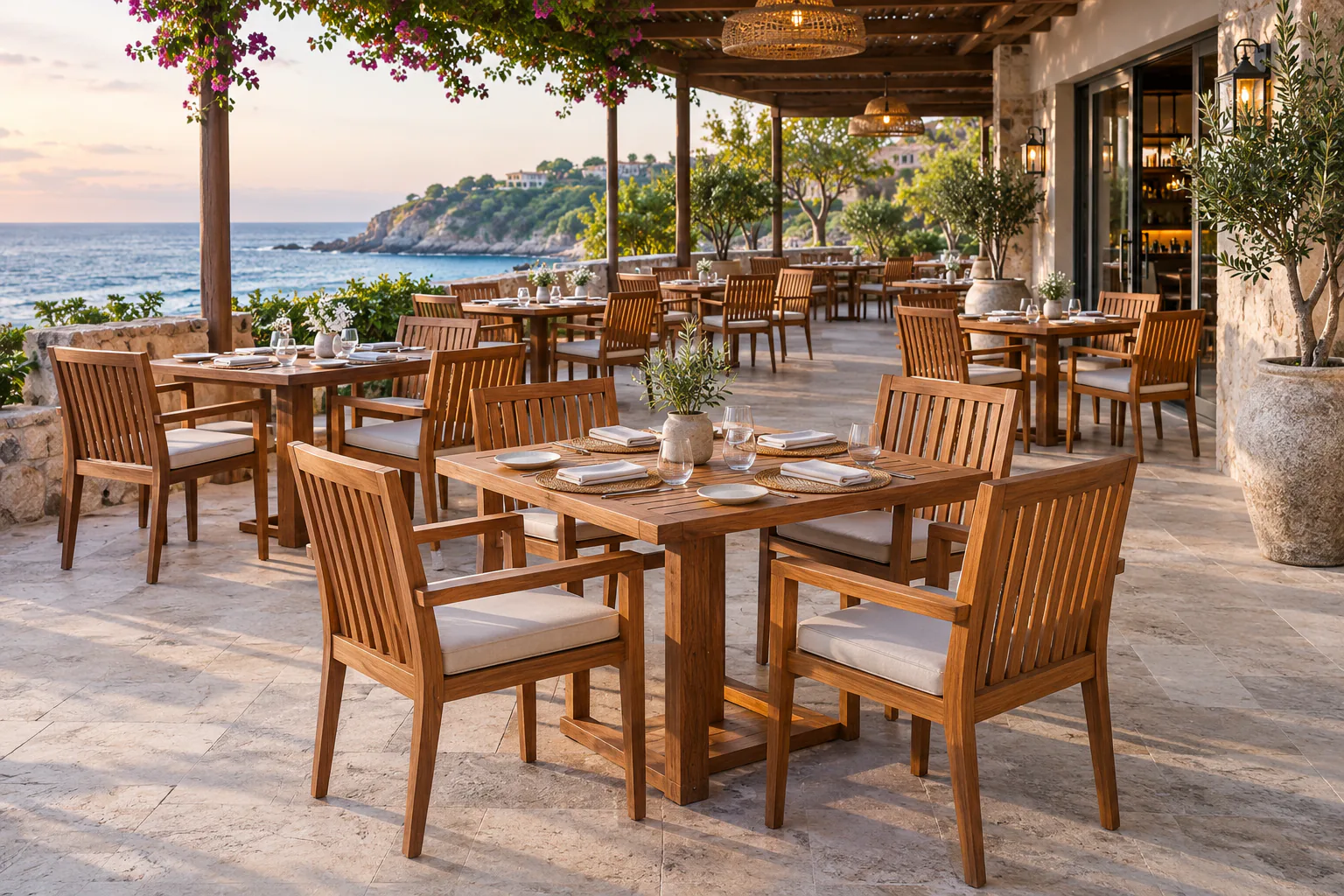
A teak dining chair can look convincing in a sample room and still create problems once forty or eighty pieces enter service. Armrests may catch beneath the tabletop. Rear legs may sit in the main service route. Seat cushions may take too long to reset after rain. Small issues become operational issues when they are repeated across a terrace.
For a hotel or restaurant project, the useful question is not simply whether the chair is made from teak. It is whether the proposed chair, table and maintenance plan work together in the intended setting.
Begin with the dining layout
Check the chair against the actual table rather than a generic dining height. Record the seat height, arm height, overall width and overall depth. Then confirm the table’s underside clearance, apron position and base layout.
An armchair that cannot move close to the table occupies more floor space than the plan suggests. A wide rear-leg stance may also reduce the clear route behind an occupied seat. Our outdoor dining table size guide explains how the table, pulled-out chairs and surrounding route should be considered as one arrangement.
If the terrace uses several table sizes, test the same chair with each one. A chair that works beside a four-seat pedestal table may behave differently at a long table with perimeter legs.
Ask what the teak specification actually covers
“Teak” is a material name, not a complete product specification. The quotation should identify the timber proposed for the production order, the finish or surface treatment, and any written care requirements. If the sample and order will be made at different times, keep the approved colour and grain expectations with the signed sample record.
The USDA Wood Handbook describes teak as a naturally durable timber with excellent dimensional stability. Those properties help explain its long use in outdoor furniture, but they do not replace sound construction or project-specific care.
Where responsible sourcing documentation is required, state it before quotation. The FSC chain-of-custody system is designed to track certified material through the supply chain. Buyers should verify the supplier’s current certificate scope and ensure that the required claim appears on the relevant sales documentation.
Inspect the joinery, not only the front view
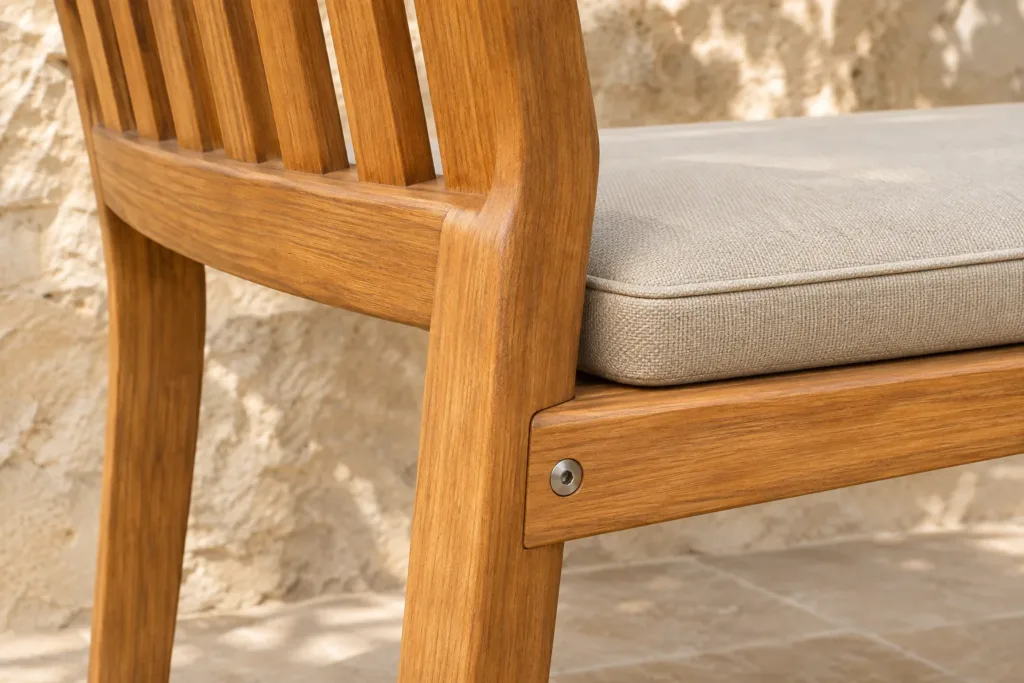
Turn the sample over. Look at the connection between the front legs, seat rails and rear frame. Check whether joints are cleanly fitted, whether exposed hardware is appropriate for the use environment, and whether feet or glides can be replaced. Ask how the chair will be repaired if one component is damaged after installation.
Consistency matters as much as the appearance of a single sample. Agree what will be checked during production: key dimensions, frame stability, joinery, sanding, finish, cushion fit and packing. If the chair is intended to stack, confirm the maximum stack height and inspect where frames contact one another. A stacking claim is incomplete if the contact points mark the timber or crush the cushions.
Cushions need their own specification
A removable seat pad changes both comfort and daily work. Record the finished cushion dimensions, filling, fabric, fastening method, seam details and replacement arrangement. Ask whether the cover can be removed and how staff should store or dry the cushion after rain.
Do not treat a fabric name or abrasion result as a complete outdoor specification. Exposure to light, moisture, staining, cleaning and seam construction all matter. The proposed fabric and filling should be confirmed for the site, and replacement covers should be orderable without replacing the chair.
Review a production sample in the way it will be used
Place the chair on the project’s flooring. Sit in it with the approved cushion. Pull it away from the table and return it several times. Check arm clearance, stability, handle points and weight from a staff member’s perspective. If the furniture will be moved every evening, that daily action belongs in the sample review.
For a large order, a sample approval sheet is more useful than a casual email saying the chair “looks good.” Photograph the approved sample from all sides and record the model, dimensions, materials, finish, cushion specification and any accepted changes. Make it clear whether the approved unit is a visual sample, a construction sample or the final pre-production reference.
Prepare the quotation around the complete setting
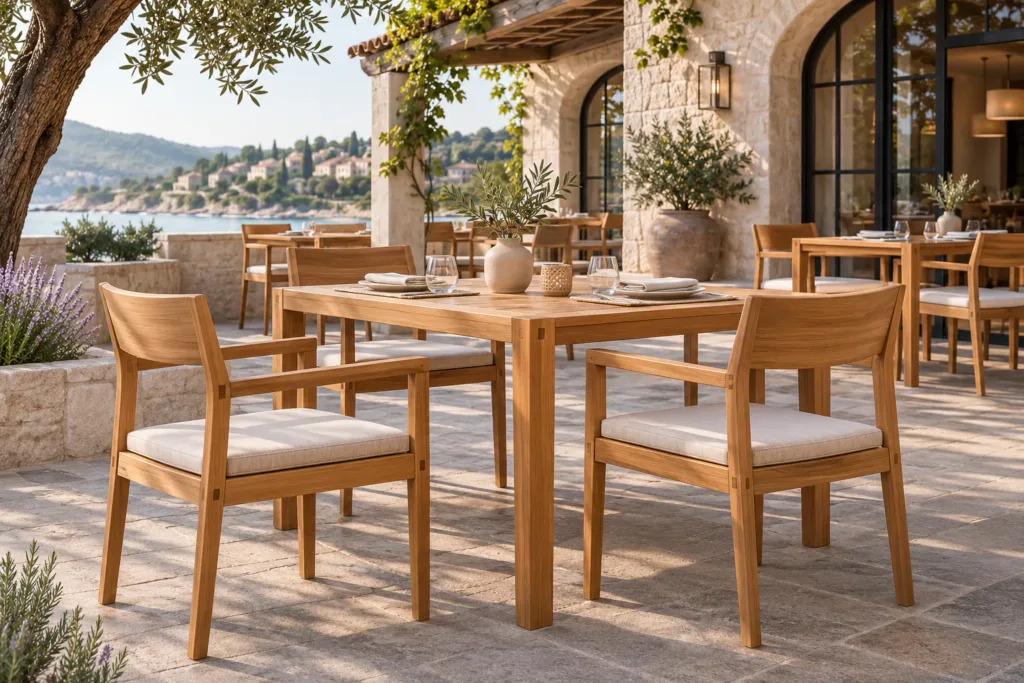
A useful request for quotation includes more than a chair image. Send the furniture schedule, table dimensions, quantities, project location, expected opening date and delivery address. Note whether the terrace is fully exposed, covered, poolside or coastal. Include any sourcing documents, test evidence, spare covers or replacement parts required by the project team.
Compare proposals line by line. One supplier may include cushions and export packing while another prices the bare frame. Confirm the delivery term, sample cost, production lead time, packing method and scope of any inspection before treating two prices as equivalent.
Discuss your teak dining chair project
Vectraout develops outdoor furniture for hospitality and trade projects. You can review our outdoor furniture collection for a starting point, then adjust dimensions, timber details, cushions and finishes around the brief.
For a project discussion, send us your layout, chair quantity, table information and destination. We will identify the details that need confirmation before sampling and quotation.