
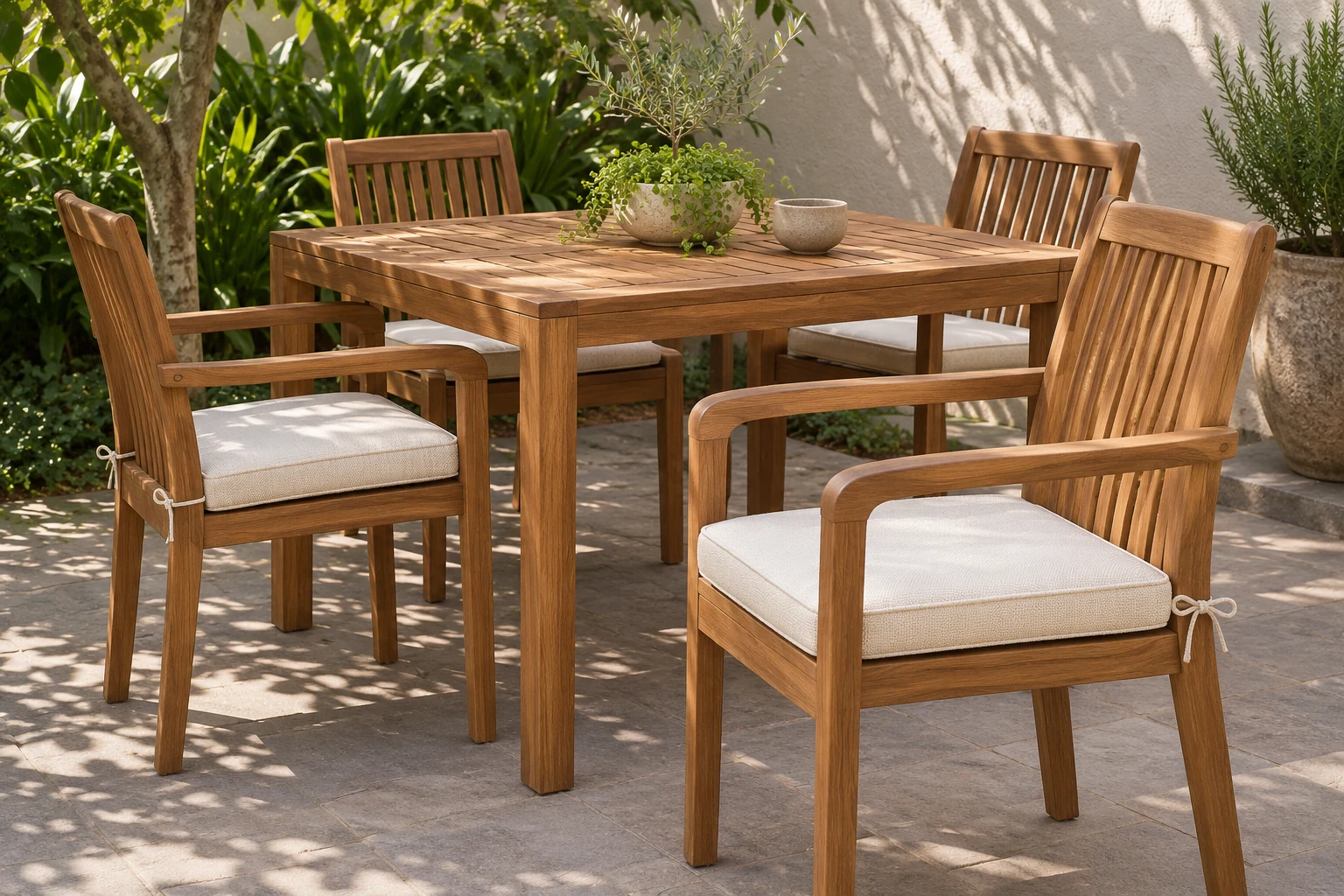
The old seat pad looks easy enough to replace: roughly square, a few centimetres thick and tied at the back. Then the new cushion arrives with a bulging front edge, a gap behind the backrest or ties that cannot reach the chair.
When replacing outdoor cushions for patio chairs, measure the chair first and use the old pad as a secondary reference. Confirm the seat shape, the intended finished cushion thickness, the attachment positions and how the cushion changes the sitting posture.
Work out what needs replacing
A stained cover, a collapsed insert and a poorly fitting pad are different problems. If the insert still has its intended shape and support, a replacement cover may be enough. If the cushion stays flattened or no longer supports the sitter, replacing the cover alone will not restore its comfort.
Check the chair at the same time. Loose joints, a damaged seat support or an unstable frame should be addressed before fitting new upholstery. A thicker cushion cannot correct a structural problem beneath it.
Photograph the chair from the front, side, back and above. Include the underside of the existing pad and its labels if available. Keep one representative chair for fitting rather than measuring several slightly different models as though they were identical.
Measure the seat, not the flattened outline of the old pad
- Measure the usable seat width at the front and rear.
- Measure the depth from the front edge to the intended back position.
- Note rounded corners, tapers, arms and any obstruction.
- Record where ties or other approved attachments can actually connect.
- Measure the existing occupied seat height and the space beneath the table.
Some chairs narrow towards the back. A rectangular cushion can overhang at the front or bunch against that taper. For an irregular seat, a clearly labelled template is more useful than a single width and depth.
As an example, a chair might measure 480 mm across the front but 430 mm at the rear. Ordering a 480 mm square pad ignores that shape. These figures illustrate the issue; they are not a recommended cushion size. Send the actual measurements and let the maker confirm the finished fit and tolerances.
| Record | How it helps | A common mistake |
|---|---|---|
| Front and rear width | Reveals a tapered seat | Using the widest measurement for every edge |
| Usable seat depth | Keeps the cushion clear of the back structure | Measuring over a curved backrest |
| Corner shape | Allows the pad to sit neatly in the frame | Assuming all four corners are identical |
| Finished thickness | Determines posture and table clearance | Choosing thickness from appearance alone |
| Attachment positions | Keeps the pad in its intended location | Copying tie positions from an unrelated cushion |
More thickness is not always more comfort
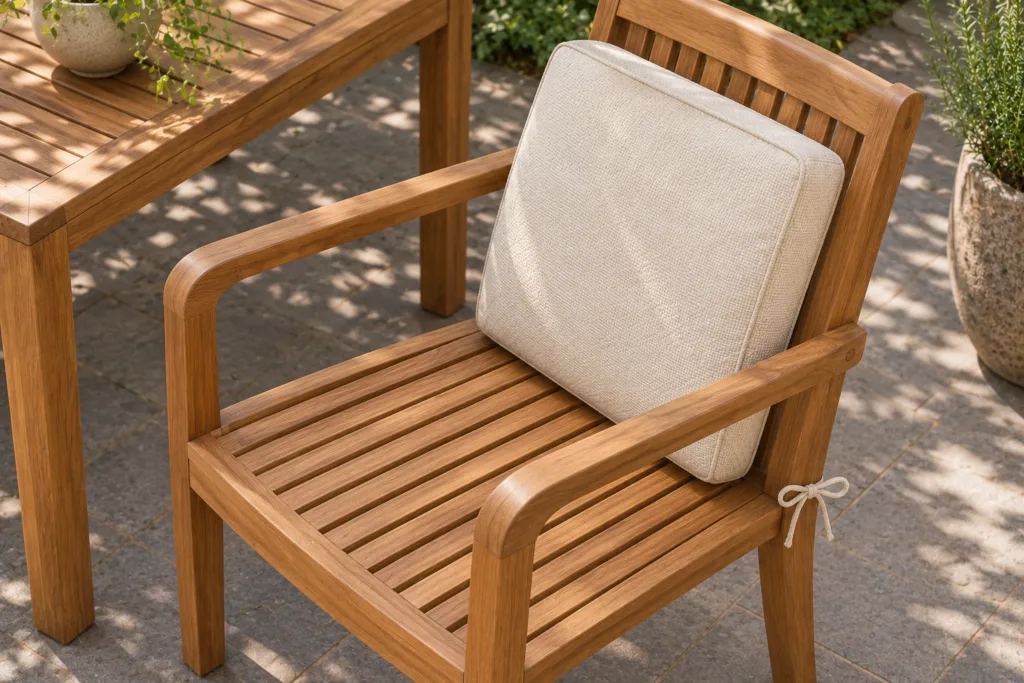
A thicker pad raises the sitter. That can change how comfortably arms fit beneath a table, where the backrest supports the body and whether feet rest naturally on the ground. On a compact dining chair, these differences are noticeable.
Agree the required support as well as the finished thickness. A filling that feels soft when squeezed by hand may compress too much in use. Review the cushion on the actual chair and, where possible, at the table it will serve.
Do not make drying-time assumptions from a filling’s marketing name. Cover fabric, seams, backing, ventilation and the way the cushion rests on the seat all affect what happens after rain. Our quick-dry foam article explains why the cushion needs to be considered as an assembly.
Ask for the fabric by range and reference
Outdoor fabric is a broad category. Request the manufacturer, range, colour reference and care instructions for the proposed fabric. Review a sample outdoors and beside the chair, rather than choosing solely from a screen.
Water resistance and easy cleaning are useful, but they do not mean the complete cushion is waterproof or maintenance-free. Check the particular construction and the conditions in which it can remain outside. A covered café terrace and an exposed pool deck have different operating needs.
For an example of product-specific advice, Sunbrella’s upholstery cleaning instructions say to consult the furniture manufacturer before removing a casing for machine washing because cushion construction varies. Use the care method that belongs to the supplied fabric and finished cushion.
Make the attachment work with the chair
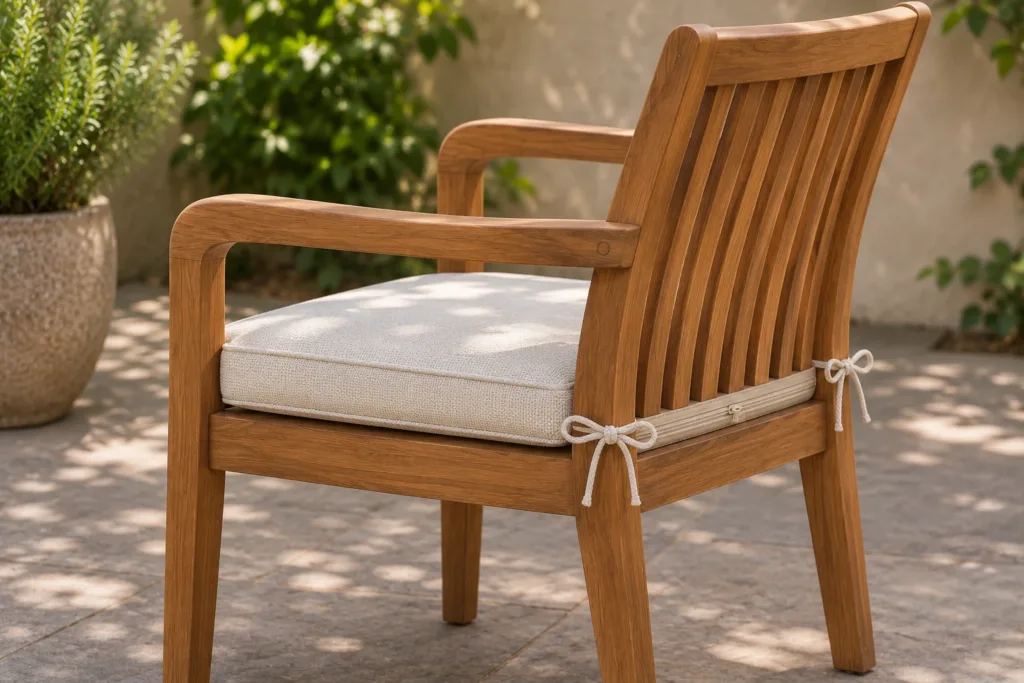
Rear ties, straps and shaped fits solve different problems. Identify a secure, appropriate attachment point on the chair, then confirm that the proposed fastener does not rub a finished surface or interfere with stacking.
Removable covers are useful only if the opening is accessible and the insert can be removed without damaging it. Check the zip position on a sample. If several cushion shapes look similar, agree a discreet identification method to avoid fitting the wrong pad to a chair.
Approve one cushion before committing to the full batch
A sample trial should include more than a quick sit. Pull the chair up to its table, stand up and sit down again, move the chair and check the back attachments. Look for overhang, wrinkling, pressure at the front of the seat and interference with the arms.
For a venue, let the people who will clean and store the cushions handle the sample. Confirm where wet cushions will dry and whether spare covers or inserts will be available. Record the approved dimensions and material references for future replacements.
If you are preparing a replacement brief, use our custom cushion specification article alongside these chair-fit checks. Send Vectraout the chair photographs and measurements before settling on a final pad size.
Frequently asked questions
Should I measure the old cushion or the chair?
Start with the chair and use the old cushion as supporting information. An old insert may be compressed, stretched or misshapen, so copying its outline can repeat the original fit problem.
Can any outdoor cushion stay outside all year?
No. Check the particular fabric, filling, construction and supplier’s care instructions. Exposure, rainfall and the available drying and storage routine all affect suitability.
Can I make a dining chair more comfortable with a much thicker pad?
Possibly, but it also changes seat height and the relationship with the backrest and table. Test a sample in the complete dining arrangement before increasing the thickness.
Do replacement cushions need ties?
That depends on the chair and cushion design. The maker should confirm an attachment or shaped fit that is appropriate for the frame and intended use.