
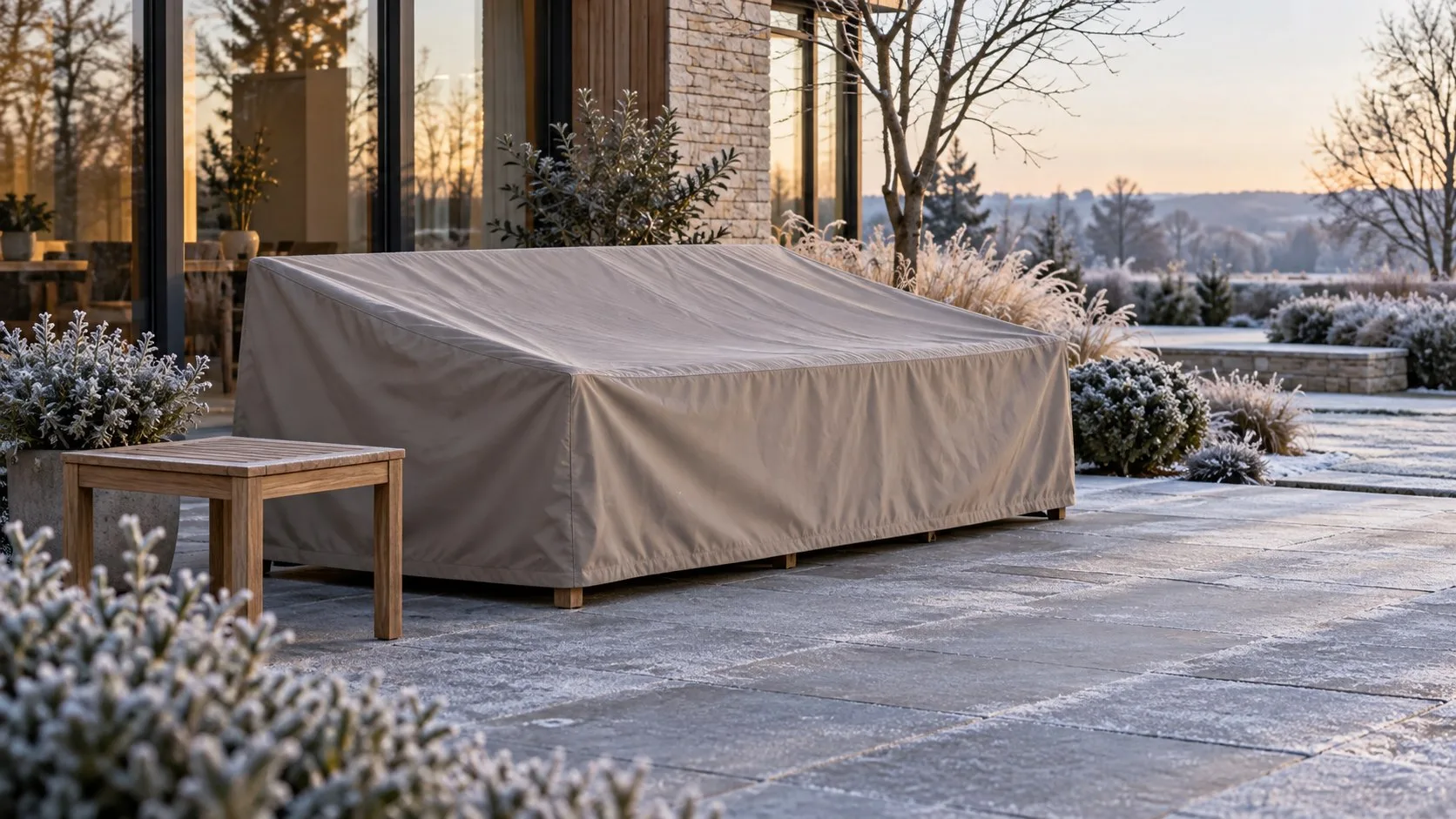
Some patio furniture can stay outside in winter, but the answer depends on the exact product, its materials and your local conditions. Check the manufacturer’s winter-use instructions, clean and dry the furniture, and plan separately for cushions, covers and storage. An outdoor label or a furniture cover does not establish suitability for freezing weather.
The useful decision is often not whether to bring the entire patio indoors. It is which components can remain, which need protection and which should be stored. A mixed-material lounge set may need more than one answer.
Start with the product, not the material label
Find the care sheet for each furniture model and look for winter storage, freezing conditions and weather exposure. If the instructions are unclear, ask for a recommendation for your location rather than interpreting all-weather as an unlimited promise.
Manufacturer-specific claims are a useful starting point. For example, POLYWOOD says its furniture can remain outside year-round. That statement applies to its products; it should not be transferred to every item described as plastic or poly furniture.
Record all the materials present. A teak-and-metal chair with upholstery needs guidance for the wood, metal and cushion. Likewise, a dining table’s frame recommendation may not cover its glass, ceramic or stone top.
Which pieces need a closer winter check?
Use this table to organize the decision. It is a list of questions to resolve, not a universal approval for outdoor storage.
| Furniture or component | What to establish before winter | Practical action |
|---|---|---|
| Coated aluminum frames | Winter exposure guidance, finish condition and drainage details | Follow the specified storage or covering method; do not obstruct drainage |
| Teak furniture | Finish-specific care and accepted weathering | Clean appropriately and choose the approved covered or sheltered arrangement |
| HDPE furniture | The actual model’s year-round recommendation | Follow that recommendation, including care for hardware |
| Steel or woven furniture | Coating condition, fiber type and cold-weather limitations | Store if the product is not recommended for the expected exposure |
| Glass, stone or ceramic tops | Instructions for that top, its supports and temperature exposure | Treat the top separately from the frame recommendation |
| Cushions and pillows | Instructions for long wet or cold periods | Arrange clean, dry, ventilated storage where required |
Do not improvise a different arrangement by flipping or stacking furniture unless the maker allows it. The original load paths, contact points or drainage may change.
How to prepare furniture before winter
Clean it before the weather makes drying difficult
Remove fallen leaves, food residue and accumulated dirt. Use the method for each material rather than washing the complete set with one aggressive cleaner. POLYWOOD’s winterizing guide includes cleaning before storage as part of its preparation routine.
Check hidden areas under cushions and around feet. A clean-looking tabletop does not tell you whether debris is sitting in a joint or under a cover.
Give it time to dry
Choose a cleaning day with an appropriate drying opportunity. Drying means more than wiping the visible top surfaces: check accessible recesses, the underside and any upholstery involved.
Do not move wet cushions straight into a storage box simply to clear the patio. Prepare the drying space first, then make the storage decision when the materials are ready.
Inspect and record existing problems
Look for loose components, damaged glides, finish damage or a torn cover. Photograph anything that needs attention and arrange an approved repair. A few notes now can prevent confusion about whether a defect appeared during storage.
For a commercial terrace, identify the model and quantity in each storage area. Keep matching hardware and removable parts labeled according to the maker’s instructions.
Are furniture covers enough for winter?
A suitable cover can reduce debris and exposure, but fit, ventilation and water management still matter. A loose sheet that traps moisture is not equivalent to a product-specific protective cover.
Gloster’s protective-cover guidance discusses breathability, removing pooled water and ensuring furniture is completely dry before extended covering. It also recommends removing covers periodically and maintaining the furniture beneath them.
Follow the actual cover’s instructions for fitting and supports. Avoid creating a flat area where water can collect, but do not invent a support that could damage the furniture. After rough weather, check for displacement, accumulated water and moisture underneath.
A cover is also not a storm restraint. Use the property’s established severe-weather procedure and the furniture manufacturer’s guidance rather than assuming covered pieces are secure in high winds.
What should you do with outdoor cushions?
Plan cushions separately from frames. Even when the frame can stay out, cushion construction and storage instructions may call for a different arrangement.
Clean them as specified, let the interior dry, and use an appropriate ventilated storage area. Avoid compressing still-damp cushions into an airtight bag or tightly packed box. Keep labels or a simple photo record so cushions return to the correct furniture in spring.
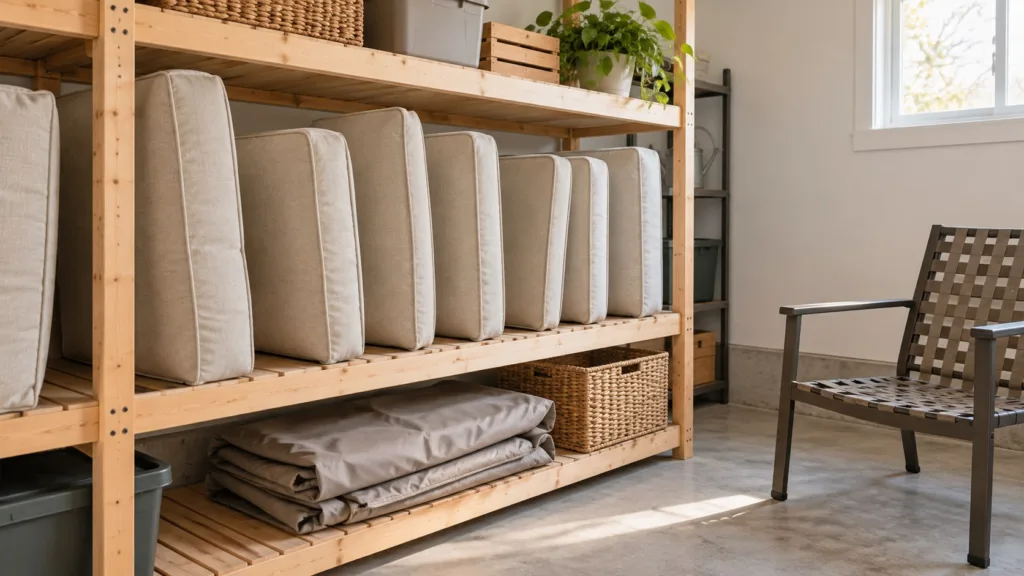
If storage space is limited, measure the actual cushion volume before buying a new set. Deep lounge cushions can demand a different storage plan from thin dining-chair pads. Storage capacity is a purchasing requirement, not an afterthought.
Where should furniture be stored?
Choose the location recommended for the product and keep it accessible for inspection. A covered area is not automatically dry or well ventilated, so consider leaks, condensation and the conditions inside storage boxes.
Gloster’s teak guidance recommends a watertight garden shed or garage when storing its teak furniture over winter. For other constructions, use their own requirements rather than transferring that advice to every material.
If stacking is permitted, use the recommended method and protective components. Do not assume dining chairs can be stacked because they have similar shapes. Check access routes before moving heavy or awkward pieces.
A useful winter handover checklist
Before leaving furniture for the season, record:
- Which models remain outside and where their exposure guidance is stored.
- Whether furniture and cushions were cleaned and dried.
- Any repairs completed or still awaiting attention.
- The cover used for each piece and how it should be checked.
- Where cushions, approved removable parts and spare components are kept.
- Who will inspect the area after significant weather and before furniture returns to use.
For a household, this can be a short note with photographs. For a hotel, it can be part of the seasonal equipment handover. Either approach is more useful than a general statement that everything has been winterized.
Frequently asked questions
Can aluminum patio furniture stay outside in snow?
Check the specific model’s instructions, including drainage, finish and mixed materials. Aluminum’s material properties alone do not answer questions about the whole item, accumulated loads or the conditions at your property.
Can teak furniture stay outside in winter?
Some products are intended for year-round exposure, while manufacturers may recommend shelter or storage for particular finishes or conditions. Confirm the recommendation for your furniture and accept that natural weathering is a separate issue from structural condition.
Should cushions stay under the same cover as the frame?
Only when the complete furniture and cover instructions allow that storage arrangement. Do not assume a water-resistant fabric and a frame cover will manage moisture inside every cushion over a long winter.
Do I need to check furniture while it is covered?
Follow the cover and furniture care instructions. Periodic checks can identify displaced covers, pooled water or trapped dampness before reopening the patio. Check the furniture’s condition before putting it back into normal use.
Include seasonal storage in your next furniture brief
When comparing outdoor furniture, tell the supplier where it will spend the off-season, how much storage you have and whether staff will maintain it during winter. Review material documentation alongside the appearance and finish choices.
You can share these requirements with vectraout as part of a custom furniture discussion. Ask for care, storage and replacement information for the final specification before confirming the order.