
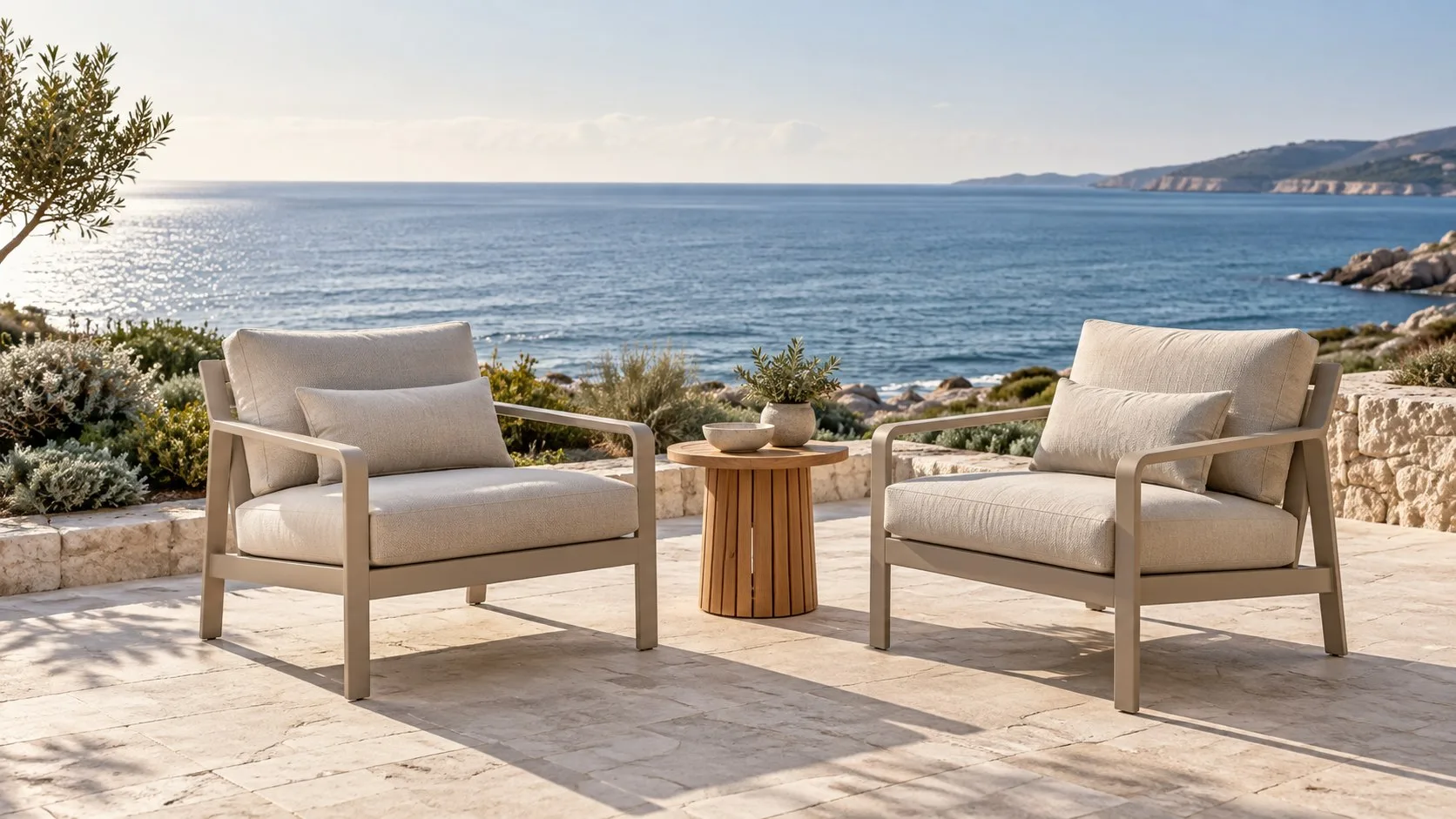
A hotel terrace can look settled in a photograph and still be difficult to run. Chairs need to work with the tables. Pool loungers need somewhere to go when the deck is cleared. A replacement cushion needs to fit the furniture ordered two seasons earlier.
The most useful outdoor furniture suppliers can help a buying team work through those details, as well as the appearance of the collection. Some supply established designer ranges; others work from a project brief to develop dimensions, finishes and product specifications.
This shortlist brings together ten businesses worth considering for hotel, resort and restaurant projects. It covers different purchasing routes, so the right choice depends on what the project actually needs.
Edited by Vectraout. Our own business is included as the custom-development option. Selections reflect published product ranges and relevance to project procurement; the order is our editorial choice.
The shortlist at a glance
| Supplier | A reason to include it in your shortlist |
|---|---|
| Vectraout | Developing a collection around a project or sourcing brief |
| DEDON | Woven outdoor furniture with a strong design identity |
| Kettal | Furniture and architectural elements for contract projects |
| Gloster | Teak collections alongside contemporary outdoor materials |
| Tribù | Coordinated dining, lounge and poolside collections |
| Manutti | Outdoor living arrangements for hospitality spaces |
| Royal Botania | Furniture, shade and outdoor lighting within one brand |
| Brown Jordan | A broad selection of outdoor seating, tables and materials |
| Talenti | Designer-led collections spanning lounge and dining areas |
| HIGOLD | Contemporary collections across several outdoor categories |
1. Vectraout — for a collection developed around your brief
Vectraout is an outdoor furniture supplier based in Zhongshan, China, working with brands, distributors and hospitality project teams. Its approach starts with the brief: reference images, a sketch, a product direction or a requirement that needs working through.
The collection covers outdoor sofas, lounge chairs, dining chairs, tables, sun loungers, daybeds and shade. Design development can include discussions about dimensions, materials, finishes and upholstery, followed by sample requirements and production specifications.
That makes Vectraout relevant when a buyer wants a coordinated range rather than a list of unrelated pieces. A restaurant might need dining chairs and lounge seating that share a finish; a hotel might be developing a furniture direction across several outdoor areas.
Start with the intended use, approximate quantities and destination. Identify which details are essential and which can be adjusted after reviewing samples. Feasibility, order quantities, pricing and delivery terms should then be confirmed for the actual brief.
View Vectraout’s outdoor furniture collection.
2. DEDON — for woven furniture that sets the character of a space
DEDON’s range centres on woven outdoor furniture, with lounge, dining and accessory collections for residential and hospitality settings. The company describes a production approach that combines proprietary fibre developed in Germany with handweaving in Cebu, the Philippines.
It is a useful name to consider when woven texture is central to the design: a resort lounge, a shaded courtyard or a terrace where the furniture is intended to be a visible part of the experience.
When comparing a particular collection, look beyond the weave colour. Review the seat dimensions, cushion arrangement and access around the finished grouping. Those details determine whether a distinctive lounge setting also works for the way guests will use it.

3. Kettal — for projects that connect furniture with architecture
Kettal’s contract division covers hospitality, restaurants, bars, wellness and other project settings. Alongside furniture, its offer includes pavilions, cabins and architectural structures.
This broader scope makes Kettal relevant when the outdoor scheme involves more than seating and tables. Furniture, shade and the structure around a lounge can be developed as connected parts of the space.
Its published contract services also describe product adaptations for large-volume projects, including changes to dimensions or functional details. Buyers should discuss those requirements early, since a modified collection can involve a different approval process from ordering standard pieces.
For an initial conversation, send the layout and explain which elements are fixed by the architecture. That gives the supplier something more useful to review than a general request for an outdoor catalogue.

4. Gloster — for projects built around teak and material detail
Gloster’s outdoor range includes dining, lounge, modular seating, loungers and tables. Teak is a prominent part of its identity, alongside other contemporary outdoor materials, and the brand provides a dedicated contract route for project enquiries.
It belongs on the shortlist when the furniture specification calls for a clear relationship between timber, upholstery and the surrounding architecture. That could be a hotel garden, a pool terrace or an outdoor dining area with a restrained material palette.
For timber-led schemes, discuss the intended appearance over time as well as the sample delivered at the start. Ask for the care instructions for the exact collection, and make sure the operations team is comfortable with the maintenance approach before the order is approved.
5. Tribù — for a consistent design language across outdoor areas
Belgian brand Tribù offers sofas, dining chairs, lounge chairs, tables, sunbeds and accessories. Its range gives designers several ways to connect dining, relaxation and poolside spaces without specifying the same furniture everywhere.
For a hotel with multiple outdoor zones, that is a useful starting point. The breakfast terrace can have a different pace from the pool lounge while remaining part of the same property.
Build a room-by-room or zone-by-zone schedule before requesting a quotation. Check dining proportions, lounge seat depths and the number of separate cushions involved in each setting. A coordinated visual scheme still needs furniture that suits the activity in each area.
View Tribù’s outdoor collections.
6. Manutti — for hospitality lounge arrangements
Manutti presents dedicated hospitality services for hotels, resorts and restaurants. Its published project approach covers terraces, pool areas, rooftop bars and beach clubs, working with architects, designers and project teams.
The brand is worth considering where an outdoor lounge needs to feel planned as a complete setting. Review the arrangement of sofas, individual chairs and tables together, rather than approving each item from a separate product image.
Operational questions should be part of that review. Can staff reach the centre of the setting for service? Where will loose cushions be stored? Which pieces need to move regularly? Ask the supplier to confirm the relevant handling and storage details for the selected products rather than assuming every model has the same features.
Explore Manutti’s hospitality offer.
7. Royal Botania — for furniture, lighting and shade in one scheme
Royal Botania’s catalogue extends beyond seating and tables to include sun loungers, daybeds, patio umbrellas, lighting and other outdoor products.
That breadth can be useful for a terrace where several product categories need to work together. An evening restaurant setting, for example, involves the furniture seen in daylight and the atmosphere created after dark.
Keep the specification for each category clear. Furniture dimensions, umbrella arrangements and lighting requirements need their own review, even when they come from the same brand. The purchasing team should also confirm which items are included in the quotation and which require separate installation or coordination with the site’s appointed specialists.
8. Brown Jordan — for a broad outdoor furniture schedule
Brown Jordan offers a wide range of seating, including dining chairs, stools, chaise lounges, daybeds, sofas and sectionals. Its tables and accessories provide further options for assembling outdoor settings across a property.
For buyers comparing different material directions, the brand’s published resources cover textiles, frame finishes and other furniture materials. This gives the design team a practical starting point for narrowing the specification.
A broad catalogue is most useful when the brief is already organised. Separate pool, dining and lounge requirements, then ask for appropriate collections within each group. Confirm the commercial application, care requirements and warranty terms for the selected items through the relevant sales channel.
9. Talenti — for designer-led lounge and dining collections
Talenti is an Italian furniture company with outdoor and indoor collections, and a published focus on contract, residential and nautical projects. Its outdoor offer includes sofas, modular seating, dining furniture, loungers and accessories.
It is a relevant option when the design team is working towards a particular architectural or decorative direction and wants to develop it through a named collection.
Review the collection as a group before settling on individual pieces. A lounge chair that looks right on its own may need a different table height or footprint from the rest of the schedule. Ask for current drawings and finish information, then confirm the route for samples, project quotations and supply to the destination.

10. HIGOLD — for contemporary collections across several outdoor uses
HIGOLD’s outdoor range includes sofa seating, dining sets, loungers, hanging chairs, sunshade products and accessories. Its published company information describes product development and manufacturing as part of its outdoor furniture business.
The range is worth reviewing when a project needs several types of furniture and the buyer wants to compare coordinated collections before finalising a schedule.
For procurement, turn the chosen appearance into a written specification. Record the frame finish, fabric reference, cushion configuration, dimensions and quantity for each item. Where a change is requested, ask the supplier to confirm exactly how it affects the sample, price and production arrangement. A familiar collection name does not replace that written approval.
See HIGOLD’s outdoor furniture.
How to make the supplier comparison useful
Shortlist suppliers against the same brief. Otherwise, one quotation may cover standard furniture while another includes development, different fabrics or additional packaging, and the totals will not describe the same purchase.
Give each supplier the site location, intended use, quantities by product and the date the furniture needs to be available. Separate essential requirements from preferences. If the opening date is fixed, distinguish the required arrival date from the planned installation and inspection dates.
Ask for an itemised proposal covering the product references, agreed materials, samples, packaging, delivery scope and commercial terms. Treat unconfirmed details as open points to resolve, rather than assumptions to carry into an order.
Finally, review a representative sample with the people who will use and manage the furniture. The design team may focus on proportions and colour; restaurant staff may notice armrest clearance, table bases or the effort required to move a chair. Both views belong in the approval process.
Discuss a custom outdoor furniture brief
If your project needs furniture developed around specific dimensions, finishes or a coordinated collection, send your brief to Vectraout. Include reference images, estimated quantities and the destination, and highlight the details your team still needs to resolve.
You can also browse the catalogues before putting together the first product schedule.