
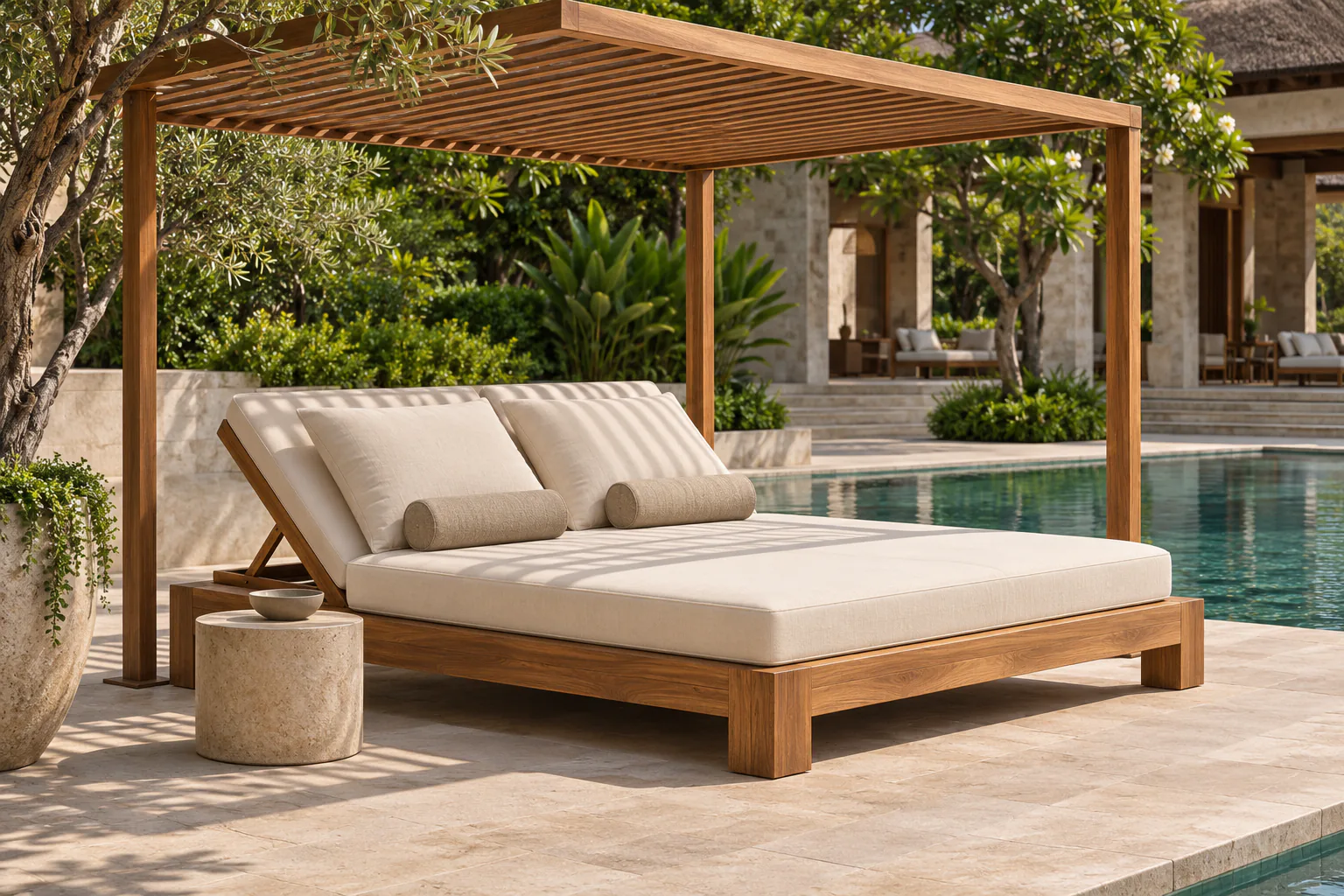
A teak outdoor daybed occupies more space and carries more operational detail than a standard sun lounger. Guests may use it alone, as a couple or as a small social setting. Staff need to reset the cushions, clean around the frame and manage wet-weather storage. The specification should reflect all of those uses.
Before selecting a model, decide what the daybed is expected to do. A quiet garden daybed, a poolside cabana bed and a beach-club platform may share a similar photograph while requiring different dimensions, upholstery and shade arrangements.
Define the intended use first
State the expected number of users and normal posture. Is the daybed primarily for lying flat, reclining against an adjustable back, or sitting with loose cushions? Will guests place towels and bags on the platform? Does service staff need to approach from one side or both?
Those answers determine the usable platform, backrest configuration and side-table position. They also help prevent a common mismatch: specifying a visually generous frame that leaves too little comfortable space once bolsters and back cushions are added.
Measure the operating footprint
The product’s overall width and depth are only the beginning. Add space for an inclined backrest, curtains or canopy posts, a side table, guest access and housekeeping. If daybeds are arranged in a row, check privacy as well as circulation.
Pool and beachfront projects should keep the furniture clear of required safety routes and equipment access. The project designer should confirm local clearance and accessibility requirements; the furniture drawing alone cannot establish compliance.
Review the frame and adjustment details
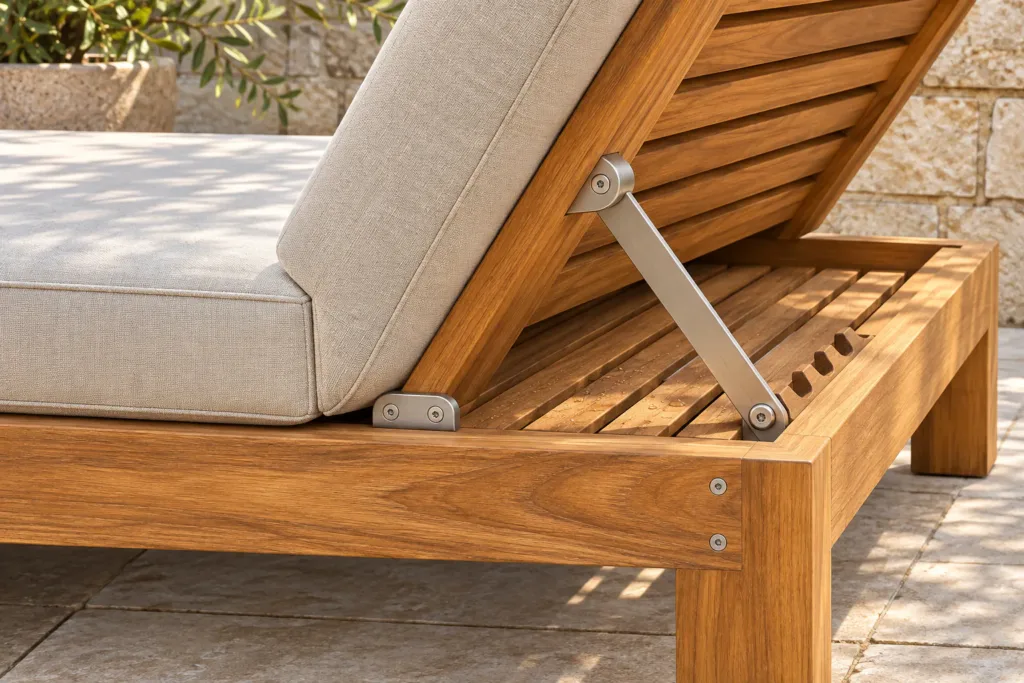
Ask the supplier to identify the timber, finish, joinery and hardware proposed for production. The USDA Wood Handbook notes teak’s very high natural durability and excellent dimensional stability. The finished daybed still depends on correct joints, support and maintenance.
For an adjustable back, test each position with the cushion installed. The mechanism should be reachable without placing fingers near a pinch point, and replacement hardware should be available. Slats need sufficient support and gaps that allow water to leave the platform without creating uncomfortable pressure points.
Write a complete cushion specification
A large daybed cushion can retain more water and be harder to move than several smaller cushions. Decide whether the project benefits from one clean visual surface or modular sections that staff can lift, dry and replace individually.
Record the filling, finished thickness, fabric, liner, seams, fastening and underside. Confirm how covers are removed and whether spare covers can be ordered by component. The Association for Contract Textiles performance guidelines are a useful reference for discussing outdoor upholstery evidence, but no single test result predicts performance in every installation.
For more detail on water movement through the complete cushion, see our quick-dry foam guide.
Treat shade as a separate system
A canopy changes the daybed’s visual character, wind exposure and maintenance. Confirm whether the shade is fixed to the frame, independently supported or supplied as a separate umbrella. Ask for the operating and wind-management instructions that apply to the proposed system.
Fabric roofs and curtains need their own material and replacement information. Staff should be able to remove or secure them according to the supplier’s instructions. Do not assume that a heavy timber base makes an open canopy suitable for every weather condition.
Plan cleaning, covers and replacement parts
Daybeds often sit near sunscreen, food and pool water. Agree the routine for cleaning timber, fabric and hardware without using incompatible products. Protective covers can reduce exposure when used correctly, but only if the furniture and cushions are dry and the cover is ventilated as directed.
Keep a parts list with the handover documents. Covers, cushion sections, glides, adjuster hardware and canopy fabric are more useful when they can be identified and reordered without measuring the entire unit again.
Approve one complete daybed before the full order
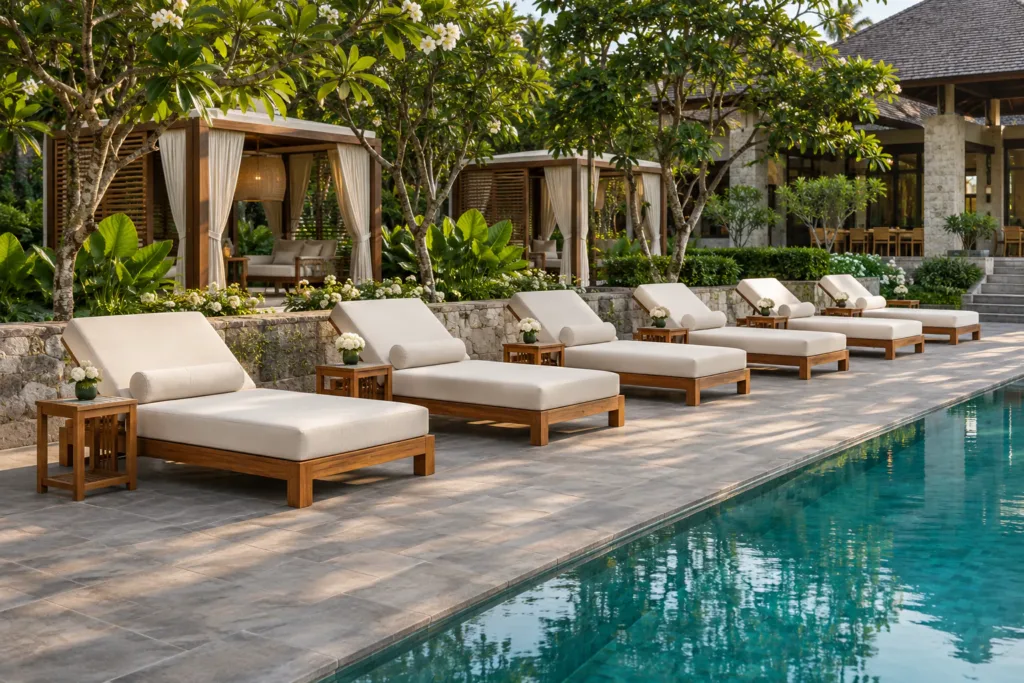
The approval sample should include the production-intent frame, hardware, cushion and shade components. Set it up on a representative surface and run through guest use, cleaning and cushion removal. Record any changes in writing and update the drawing before production begins.
For a project quotation, provide the quantity, layout, location, preferred cushion arrangement, shade requirement and delivery programme. Include site-access limits if the daybed cannot be delivered fully assembled.
Develop a daybed for your hospitality project
Use Vectraout’s outdoor furniture collection as a design starting point. To discuss dimensions, teak details, cushions and packing, send us the project plan, quantities and destination. We will separate confirmed specifications from items that still need a sample or site decision.