
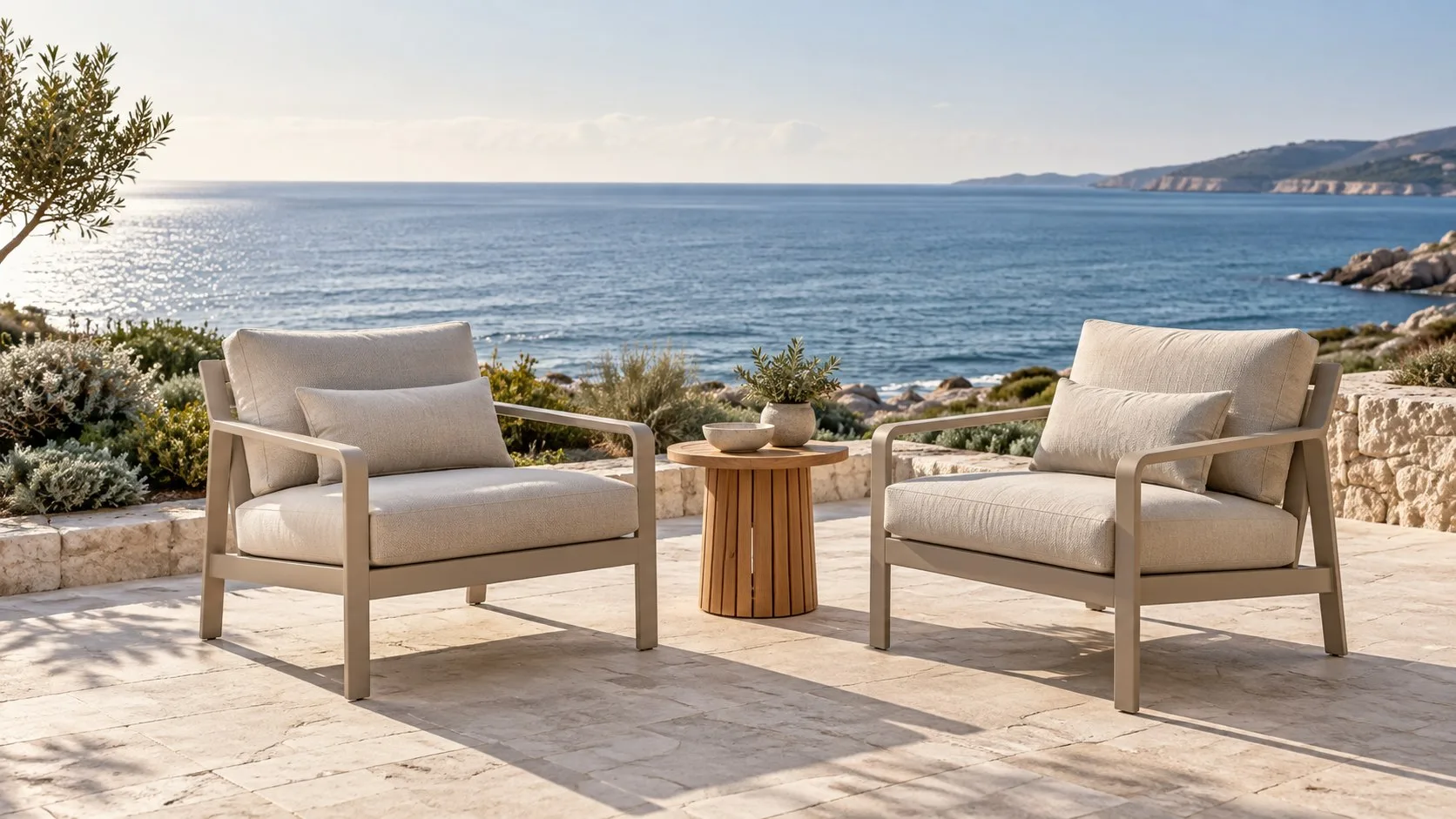
Choosing outdoor furniture for salt air means assessing the complete piece: frame, finish, fasteners, woven parts and cushions. Powder-coated aluminum, teak and outdoor-grade HDPE are options worth comparing, but none makes every design suitable for every seafront location. Start with the exposure conditions, then confirm maintenance, replacement parts and coastal warranty terms.
A sheltered balcony near the sea and an open beach-club terrace are different purchasing briefs. They may share a view, but their furniture can face different amounts of spray, sun, wind, wet use and staff attention. Describe those conditions before asking a supplier which material is best.
What should your coastal exposure brief include?
Write down what reaches the furniture during ordinary use, not just its distance from the shoreline. A simple location record helps suppliers explain the suitability and limits of their recommendations.
| Site condition | Information to include | Purchasing question |
|---|---|---|
| Sea air and spray | Sheltered or exposed position; observed salt deposits | Is this complete model recommended for this exposure? |
| Sun and shade | Hours of direct sun and available shade | What finish, rope and fabric evidence supports the recommendation? |
| Wet use | Rain, pool splash, wet towels and cleaning routines | How do the frame and cushions drain and dry? |
| Movement and storage | Daily rearrangement, stacking and off-season storage | How are finishes protected during handling? |
| Care resources | Available fresh water, staff time and storage space | Can the proposed maintenance routine actually be followed? |
For an exposed site, also involve the property’s team in wind and storm procedures. A material recommendation does not establish that an individual chair or table is suitable to leave unsecured in severe weather.
Which furniture materials are worth comparing?
Use material names to build a shortlist, then evaluate the selected product. Construction details and aftercare can change the practical value of the same material from one model to another.
Powder-coated aluminum: check the finishing system
Aluminum is a useful option when manageable weight and a metal-frame design are priorities. Gloster’s powder-coated aluminum guidance describes the role of pretreatment and coating in its furniture construction. Ask your supplier which finishing process applies to the actual frame being quoted.
Corrosion-resistant does not mean immune to damage. RH’s aluminum care sheet warns that coating damage and high coastal salt exposure can affect the finish, and recommends frequent washing and rinsing to remove deposits. Inspect edges, joints, feet and handling points, and ask how scratches should be addressed.
Teak: agree on the appearance you want to maintain
Teak is worth considering when timber texture is central to the design. Decide whether the project accepts natural weathering or expects a maintained color and finish. That choice affects the care brief.
RH’s natural teak guidance explains that exposed teak develops a silver-gray patina and that the rate varies with climate, exposure and care. An approved new sample should therefore be accompanied by an agreement about expected appearance changes. Do not confuse normal color weathering with approval of loose joints or structural damage.
HDPE: assess the whole construction
Outdoor-grade HDPE furniture is another option for coastal settings. POLYWOOD describes the moisture and salt resistance of its HDPE-based furniture. Those product claims should not be treated as a guarantee for every plastic chair sold as poly furniture.
Confirm the material, intended exposure, hardware and care requirements of the model under consideration. Evaluate its proportions, comfort, handling and repair options alongside resistance claims. Include HDPE in a comparison where relevant; confirm availability rather than assuming every manufacturer offers it.
Stainless steel and woven elements: ask more specific questions
For stainless components, specify the grade and surface finish instead of accepting the word stainless alone. Gloster’s brushed stainless steel care guidance explains that even its treated stainless steel can develop superficial brown marks, particularly in coastal conditions, and needs maintenance.
For woven chairs, request the rope or fiber specification plus the frame and fastener details. A durable woven surface does not answer questions about the hidden structure beneath it. Keep these components listed separately in the quotation.
What should you check on coastal outdoor cushions?
Specify the complete cushion rather than just a fabric brand. Ask about the cover, filling, seams, underside and the recommended way to remove moisture. Confirm whether staff can remove and refit covers, and how replacements will be ordered.
Sunbrella’s upholstery instructions recommend thorough rinsing and air drying after cleaning, and checking the furniture manufacturer’s instructions before machine washing removable casings. Fabric-care advice does not, by itself, establish the drying performance of a finished cushion.
At sample review, follow the approved cleaning method and record the practical handling and drying requirements. Do not promise a fixed drying time based on a quick demonstration: humidity, airflow, cushion construction and weather all influence actual use.
How do you compare two coastal furniture quotations?
Compare quotations against the same site brief. If one supplier quotes a different finish, cushion or hardware specification, make that difference visible before comparing the price.
Ask each supplier to answer these questions in writing:
- Is the complete model recommended for the stated coastal exposure and intended residential or commercial use?
- What are the frame, fastener, rope and cushion specifications?
- What evidence supports the relevant material and product-performance claims?
- What cleaning, inspection and storage routines are required?
- Does the warranty cover the stated use, and what coastal or maintenance exclusions apply?
- Which components can be replaced, through whom, and on what availability terms?
Keep the responses with the approved sample and order documents. This gives the purchasing and operations teams the same reference point instead of leaving the maintenance expectations in a sales conversation.
What does a practical coastal care plan look like?
Set the care frequency according to the manufacturer’s instructions and the conditions observed on site. Avoid imposing one universal monthly or weekly interval on every property and material.
For coated metal, a gentle cleaning method is usually the starting point. Tribù’s metal care guidance specifies clear water and a pH-neutral liquid detergent. Use the selected product’s instructions for cleaners, tools and protective products; do not assume the method for bare stainless steel is also suitable for a powder-coated surface.
A useful operations record has four entries: the condition found, the action taken, the person responsible and any follow-up needed. Include accessible joints, feet, finish damage and cushion condition in routine observations. Escalate loose or damaged components to the supplier rather than treating every issue as a cleaning problem.
Before long storage or covering, follow the product’s drying and ventilation instructions. Tribù’s metal maintenance guide advises clean, dry furniture, ventilated storage and avoiding non-breathable plastic covers. Covers are part of a care plan, not a substitute for one.
Frequently asked questions
Is aluminum outdoor furniture suitable for salt air?
It can be when the selected frame, finish and hardware are appropriate and maintained as instructed. Ask for a recommendation for the whole model and your location. The material name alone does not establish coastal suitability.
Does teak need to stay its original golden color?
No. Natural weathering can be an intentional design choice. Agree on the desired appearance and care method with the supplier. Different teak finishes have different maintenance requirements, so avoid applying a generic treatment without checking compatibility.
Can you leave coastal furniture outside all year?
Confirm this for the specific product and climate. Year-round use must account for care, seasonal weather, cushions and storage options. A recommendation for normal outdoor exposure is not permission to leave furniture in storm conditions.
Is a salt-spray test enough to choose furniture?
Use it as part of the evidence, not the entire decision. Ask what component was tested, how the result was assessed and whether it represents the item being supplied. Also review construction, product-use requirements and warranty conditions.
A coastal project brief you can send to a supplier
Use this starting point and add site photographs:
We are furnishing a coastal [hotel terrace / restaurant / private patio] in [destination]. The furniture will be [sheltered / exposed] and may receive [sea spray / pool splash / direct sun]. We need approximately [quantity] pieces. Our preferred materials and appearance are [details]. Please recommend the complete frame, finish, hardware and cushion specification, with care instructions, relevant evidence, replacement options and warranty terms for this use.
You can browse vectraout’s outdoor furniture and discuss a custom project brief. Bring your site conditions and maintenance expectations into the design and customization discussion before selecting the final materials.